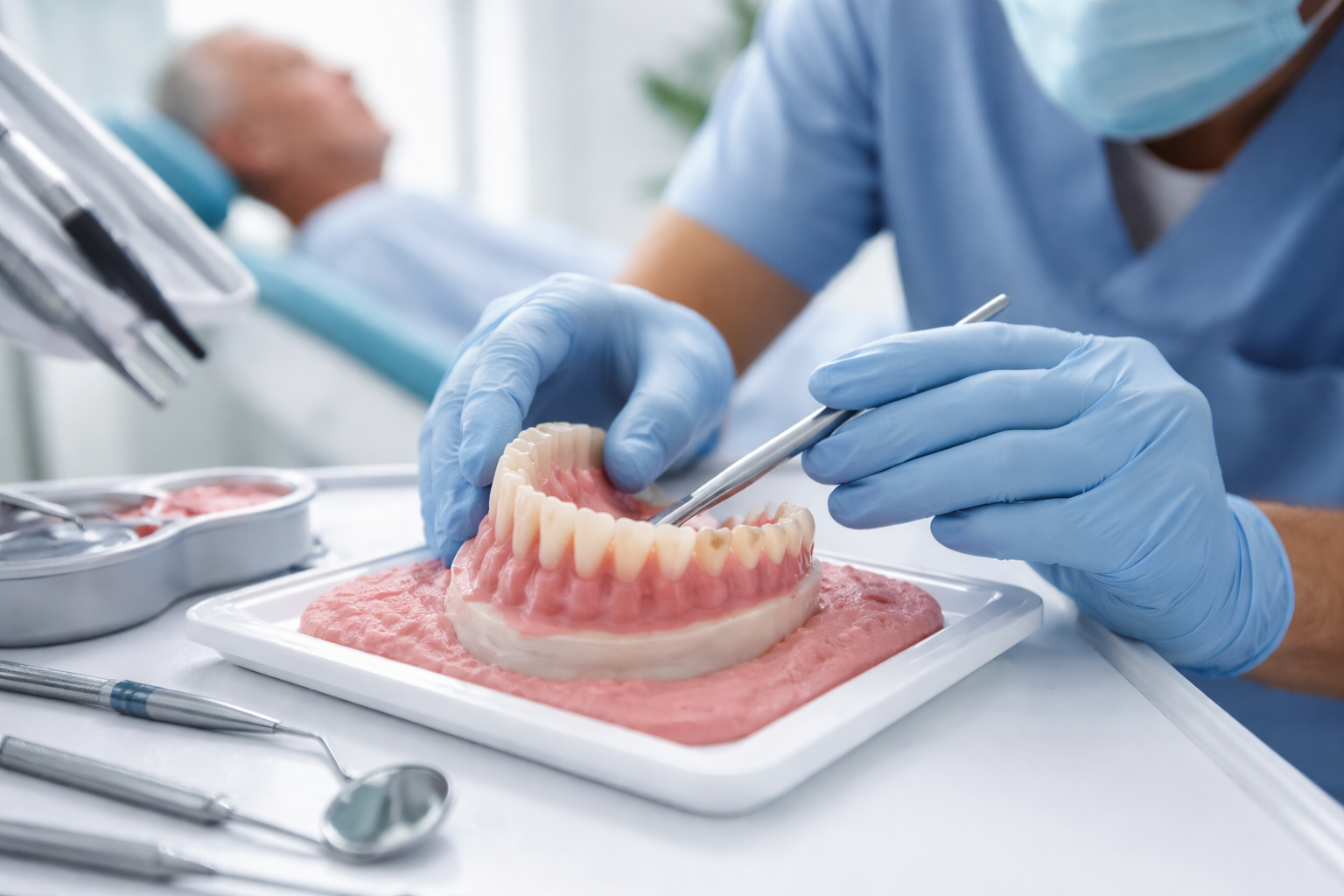
A denture reline is a dental procedure that reshapes the inner surface of a denture so it fits properly against the gums after changes in the mouth. Over time, gum tissue and jawbone shrink (a process known as resorption), causing dentures to loosen. Relining restores stability, comfort, and function without replacing the entire denture.
Definition and Purpose
A denture reline involves adding new material—usually acrylic or a soft liner—to the underside of an existing denture. This adjustment improves contact between the denture base and the gum tissue.
Primary purposes:
- Restore proper fit
- Improve chewing efficiency
- Prevent irritation and sore spots
- Extend denture lifespan
How It Works
The procedure focuses on adapting the denture to current oral structures rather than creating a new appliance.
Basic mechanism:
- A dental impression is taken of the gums
- New lining material is molded to match the updated shape
- The denture is adjusted to fit snugly
This ensures better suction, stability, and comfort during daily use.
Who Needs a Denture Reline?
Denture relining is recommended for individuals experiencing changes in fit or comfort.
Common cases include:
- Long-term denture users (due to bone shrinkage)
- Patients with loose or unstable dentures
- Individuals with gum irritation or pressure spots
- People noticing difficulty in chewing or speaking
Summary
A denture reline is a corrective dental procedure that improves the fit of existing dentures by reshaping their inner surface. It addresses natural changes in the gums and jaw, helping restore comfort, stability, and function without requiring full denture replacement.
Keypoints
- Denture relining adjusts the internal surface of dentures
- It compensates for gum and bone changes over time
- Improves comfort, fit, and oral function
- More cost-effective than replacing dentures
- Recommended when dentures become loose or uncomfortable
Read also:https://capitallooms.com/cellulogia/
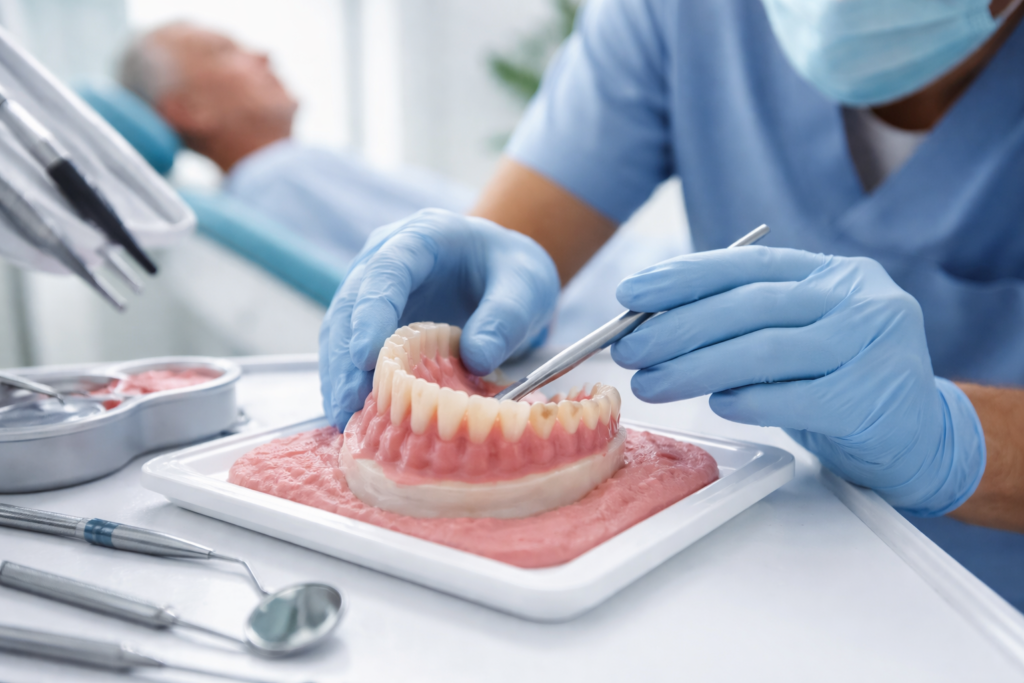
Why Dentures Need Relining
Dentures require relining because the shape of the mouth naturally changes over time. The primary reason is the gradual shrinking of the jawbone and gum tissue, which affects how dentures fit. Without adjustment, dentures become loose, unstable, and uncomfortable.
Bone Shrinkage (Gum Resorption)
After tooth loss, the jawbone no longer receives stimulation from tooth roots. This leads to a natural process called bone resorption, where the bone slowly decreases in volume.
Impact on dentures:
- Creates gaps between dentures and gums
- Reduces suction and stability
- Causes improper alignment
Loose Denture Issues
As the underlying structure changes, dentures no longer fit snugly. Loose dentures can move during speaking or eating, affecting daily activities.
Common problems:
- Slipping or shifting dentures
- Clicking sounds while talking
- Reduced chewing efficiency
- Increased reliance on adhesives
Changes in Mouth Shape
Over time, both soft tissues (gums) and hard tissues (bone) change shape. Weight loss, aging, and oral health conditions can accelerate these changes.
Effects include:
- Uneven pressure distribution
- Development of sore spots
- Difficulty maintaining proper bite
Summary
Dentures need relining primarily due to natural changes in the jawbone and gums. These changes lead to a poor fit, causing discomfort and reduced function. Relining helps restore proper alignment and ensures dentures remain stable and effective.
Keypoints
- Jawbone shrinkage is the main cause of poor denture fit
- Loose dentures can affect speech and eating
- Mouth shape changes over time due to aging and health factors
- Relining restores fit without replacing dentures
- Early relining prevents discomfort and oral complications
Types of Denture Reline
Denture relining is categorized based on the materials used and the method of application. Each type serves different patient needs depending on comfort, durability, and urgency.
Soft Denture Reline
A soft denture reline uses a flexible, cushioning material applied to the inner surface of the denture. It is designed to provide enhanced comfort, especially for sensitive or irritated gums.
Key characteristics:
- Made from soft polymers or silicone-based materials
- Provides a cushioning effect
- Ideal for patients with sore or tender gums
Best suited for:
- Individuals with gum sensitivity
- Patients recovering from oral surgery
- Cases requiring temporary comfort solutions
Hard Denture Reline
A hard denture reline uses durable acrylic material similar to the original denture base. It offers a long-lasting and stable solution.
Key characteristics:
- Made from rigid acrylic resin
- Strong and durable
- Provides a precise, long-term fit
Best suited for:
- Patients needing a permanent adjustment
- Long-term denture users
- Individuals without gum sensitivity
Chairside vs Lab Reline
Relining can also be classified based on where and how the procedure is performed.
Chairside Reline
- Performed directly in the dental clinic
- Completed in a single visit
- Faster but slightly less precise
Lab Reline
- Denture is sent to a dental laboratory
- Takes a few days to complete
- Offers higher accuracy and better fit
Comparison Table
| Type | Material | Comfort Level | Durability | Time Required | Best For |
|---|---|---|---|---|---|
| Soft Reline | Flexible liner | High | Moderate | Short | Sensitive gums |
| Hard Reline | Acrylic | Moderate | High | Medium | Long-term use |
| Chairside Reline | Varies | Moderate | Moderate | Same day | Quick fixes |
| Lab Reline | Acrylic | High | High | Few days | Precision fit |
Summary
There are multiple types of denture relines, including soft and hard options, as well as chairside and laboratory procedures. Each type differs in comfort, durability, and processing time, allowing dentists to choose the most suitable approach based on patient needs.
Keypoints
- Soft relines provide cushioning and comfort
- Hard relines offer durability and long-term results
- Chairside relines are quick but less precise
- Lab relines deliver more accurate and stable fit
- Selection depends on patient condition and urgency
Denture Reline Procedure (Step-by-Step)
A denture reline procedure involves reshaping the inner surface of the denture to match the current contours of the gums. It is a structured clinical process performed by a dentist to ensure accuracy, comfort, and proper fit.
Step 1: Initial Examination
The dentist evaluates the condition of the dentures and oral tissues to determine if relining is appropriate.
Assessment includes:
- Fit and stability of dentures
- Condition of gums and soft tissues
- Presence of sores or irritation
- Suitability for soft or hard reline
Step 2: Taking Impressions
An updated impression of the patient’s gums is taken to capture the current shape of the mouth.
Process:
- Denture is used as a tray or a separate tray is used
- Impression material is applied
- Patient bites gently to form an accurate mold
Step 3: Preparing the Denture
The inner surface of the denture is modified to receive the new lining material.
Includes:
- Removing a thin layer of the existing base
- Cleaning and disinfecting the denture
- Creating space for the new material
Step 4: Applying Reline Material
The selected reline material (soft or hard) is applied to the denture base.
Depending on type:
- Chairside: material is placed and shaped directly in the mouth
- Lab: denture is sent to a laboratory for precise processing
Step 5: Fitting and Adjustments
Once the material sets, the denture is placed back in the mouth for final adjustments.
Final checks:
- Proper fit and comfort
- Bite alignment
- Pressure points or discomfort areas
Step-by-Step Table
| Step | Stage | Description | Time Required |
|---|---|---|---|
| 1 | Examination | Oral and denture assessment | 10–20 minutes |
| 2 | Impressions | Capture gum shape | 15–30 minutes |
| 3 | Preparation | Modify denture surface | 10–15 minutes |
| 4 | Material Application | Apply reline material | 20–60 minutes |
| 5 | Final Adjustment | Fit and comfort check | 10–20 minutes |
Summary
The denture reline procedure follows a step-by-step clinical approach, including examination, impression taking, material application, and final adjustment. This ensures the denture fits accurately and comfortably according to the patient’s current oral structure.
Keypoints
- The procedure begins with a professional dental assessment
- Impressions ensure accurate fit
- Material type determines method and duration
- Chairside relines are faster; lab relines are more precise
- Final adjustments are essential for comfort and function
Denture Reline Cost
The cost of a denture reline varies depending on the type of reline, materials used, clinic location, and the complexity of the case. It is generally more affordable than replacing dentures, making it a cost-effective maintenance procedure.
Cost by Type
Different types of denture relines have varying price ranges based on materials and processing methods.
| Type of Reline | Average Cost (USD) | Description |
|---|---|---|
| Soft Reline | $150 – $400 | Uses flexible material for comfort |
| Hard Reline | $200 – $500 | Durable acrylic, long-term solution |
| Chairside Reline | $100 – $300 | Completed in one visit |
| Lab Reline | $200 – $600 | Higher precision, lab-processed |
Cost by Location
Prices vary significantly by country and clinic standards.
| Region | Average Cost Range |
|---|---|
| United States | $300 – $800 |
| United Kingdom | £100 – £400 |
| Pakistan | PKR 8,000 – 25,000 |
| India | ₹3,000 – ₹15,000 |
Costs may vary depending on clinic reputation and materials used.
Factors Affecting Cost
Several variables influence the total cost of a denture reline:
Key factors include:
- Type of reline (soft vs hard)
- Chairside vs laboratory procedure
- Dentist’s expertise and clinic standards
- Geographic location
- Condition of existing dentures
- Additional adjustments or repairs required
Summary
Denture relining costs depend on the type of procedure, materials, and location. While prices vary globally, it remains a more affordable option compared to full denture replacement, offering improved fit and comfort at a lower cost.
Keypoints
- Cost varies based on type and method of reline
- Lab relines are more expensive but precise
- Chairside relines are faster and cheaper
- Prices differ significantly by region
- More affordable than replacing dentures
Denture Reline vs Rebase vs Replacement
Denture relining, rebasing, and replacement are three different approaches to restoring denture fit and function. Each option is recommended based on the condition of the denture and the patient’s oral health.
Key Differences Explained
- Reline: Adjusts only the inner surface of the denture
- Rebase: Replaces the entire base while keeping the teeth
- Replacement: Creates a completely new denture
Comparison Table
| Feature | Denture Reline | Denture Rebase | Denture Replacement |
|---|---|---|---|
| Purpose | Improve fit | Renew denture base | Full new denture |
| Structure Change | Inner lining only | Entire base replaced | Entire denture replaced |
| Durability | Moderate to high | High | Very high |
| Cost | Low to moderate | Moderate | High |
| Time Required | Same day or few days | Few days | Several visits |
| Best For | Loose but intact dentures | Worn base, good teeth | Severely damaged dentures |
When Is Each Recommended?
Denture Reline:
- Dentures are structurally intact
- Fit has become loose due to gum changes
- No major cracks or damage
Denture Rebase:
- Denture base is worn or damaged
- Artificial teeth are still in good condition
- Need a stronger foundation
Denture Replacement:
- Dentures are old, damaged, or broken
- Poor fit cannot be corrected with reline or rebase
- Significant changes in oral structure
Summary
Relining, rebasing, and replacement serve different purposes in denture maintenance. Relining improves fit, rebasing rebuilds the base, and replacement provides an entirely new denture. The appropriate option depends on the denture’s condition and the level of structural change required.
Keypoints
- Relining adjusts the inner surface only
- Rebasing replaces the denture base بالكامل
- Replacement involves a completely new denture
- Choice depends on denture condition and damage level
- Relining is the most cost-effective option
Signs You Need a Denture Reline
Recognizing the early signs of an ill-fitting denture is essential to maintain comfort, oral health, and proper function. As the shape of the gums and jaw changes over time, dentures may no longer fit correctly, leading to noticeable issues.
Loose or Unstable Dentures
One of the most common signs is a loose fit. Dentures may move or slip during normal activities.
Indicators:
- Dentures shift while talking or eating
- Frequent need for denture adhesives
- Feeling of instability in the mouth
Sore Spots and Gum Irritation
Poorly fitting dentures can create pressure points on the gums, leading to discomfort or pain.
Common symptoms:
- Red or inflamed areas on gums
- Pain while wearing dentures
- Development of ulcers or sore spots
Difficulty Chewing
When dentures do not fit properly, chewing becomes less effective and uncomfortable.
Issues include:
- Trouble biting or grinding food
- Avoiding certain foods
- Reduced chewing efficiency
Changes in Speech
Loose dentures can affect how words are pronounced, especially sounds that require tongue and palate coordination.
Signs:
- Slurred or unclear speech
- Clicking sounds when talking
- Difficulty pronouncing certain words
Frequent Denture Movement
If dentures constantly need repositioning, it indicates that the internal fit is no longer accurate.
Effects:
- Interrupted daily activities
- Increased discomfort
- Reduced confidence while speaking or eating
Summary
Signs such as looseness, gum irritation, difficulty chewing, and speech changes indicate that dentures may need relining. Addressing these issues early helps restore proper fit, improve comfort, and prevent further oral health complications.
Keypoints
- Loose dentures are the most common warning sign
- Gum irritation and sores indicate poor fit
- Difficulty chewing affects nutrition and comfort
- Speech problems can result from denture movement
- Early relining prevents further complications
Benefits of Denture Reline
Denture relining provides multiple functional and health-related benefits by restoring the proper fit of existing dentures. It helps improve daily comfort, oral efficiency, and overall denture performance without requiring a full replacement.
Improved Comfort
A properly relined denture adapts to the current shape of the gums, reducing pressure points and irritation.
Benefits include:
- Reduced soreness and discomfort
- Better adaptation to gum contours
- More natural feel while wearing
Better Chewing Efficiency
Relining restores stability, allowing dentures to function more effectively during eating.
Improvements:
- Stronger bite force
- Easier chewing of various foods
- Reduced risk of food slipping
Enhanced Stability and Fit
A secure fit minimizes movement and improves overall denture performance.
Key advantages:
- Less slipping or shifting
- Improved suction and grip
- Reduced dependence on adhesives
Improved Oral Health
Ill-fitting dentures can cause irritation and infections. Relining helps maintain healthier oral tissues.
Health benefits:
- Prevents gum inflammation
- Reduces risk of sores and ulcers
- Supports proper jaw alignment
Cost-Effective Solution
Relining is significantly less expensive than replacing dentures while still improving function.
Financial advantages:
- Lower cost compared to new dentures
- Extends lifespan of existing dentures
- Minimizes need for frequent replacements
Summary
Denture relining improves comfort, stability, chewing ability, and oral health. It is a practical and cost-effective way to maintain denture performance and extend their usability without undergoing full replacement.
Keypoints
- Enhances comfort by reducing pressure points
- Improves chewing and bite efficiency
- Provides better stability and fit
- Supports overall oral health
- More affordable than denture replacement
Risks and Limitations
Although denture relining is a widely used and effective procedure, it is not suitable for every situation. Understanding its limitations helps set realistic expectations and ensures proper treatment decisions.
Temporary Solution in Some Cases
Relining does not fix structural problems in severely worn or damaged dentures. In such cases, results may only be short-term.
Limitations include:
- Does not correct broken denture frameworks
- May need repeated adjustments over time
- Less effective if oral changes continue rapidly
Not Suitable for Severely Damaged Dentures
If the denture base or teeth are significantly worn, relining alone may not restore proper function.
Examples:
- Cracked or fractured denture base
- Severely worn artificial teeth
- Distorted denture structure
Material Wear and Breakdown
Over time, reline materials can wear out or lose effectiveness, especially with soft relines.
Common issues:
- Loss of cushioning effect (soft relines)
- Surface roughness or degradation
- Reduced bonding with denture base
Possible Adjustment Discomfort
After relining, some patients may experience temporary discomfort while adjusting to the new fit.
Symptoms:
- Mild soreness in gums
- Pressure sensitivity
- Need for follow-up adjustments
Need for Regular Dental Visits
Relined dentures still require ongoing monitoring to maintain fit and function.
Ongoing care includes:
- Periodic dental checkups
- Re-evaluation of fit over time
- Possible reline or replacement in future
Summary
Denture relining is effective but has limitations. It may not work for severely damaged dentures, can require future adjustments, and is not a permanent solution in all cases. Regular dental care is necessary to maintain long-term effectiveness.
Keypoints
- Relining is not a permanent fix in all cases
- Severe denture damage may require replacement
- Soft materials can wear out over time
- Temporary discomfort may occur after adjustment
- Regular dental checkups are essential for maintenance
Aftercare Tips for Denture Reline
Proper aftercare after a denture reline is essential to ensure comfort, maintain fit, and extend the lifespan of the denture. Following correct hygiene and usage practices also helps prevent irritation and complications during the adjustment period.
Initial Adjustment Period Care
After a reline, the mouth may take a short time to adapt to the new fit.
What to expect and do:
- Mild soreness or pressure is normal for a few days
- Wear dentures as advised by the dentist
- Avoid removing and reinserting frequently in the first 24 hours
Cleaning and Hygiene Practices
Good cleaning habits help maintain the reline material and prevent infections.
Recommended care routine:
- Clean dentures daily with a soft brush
- Use non-abrasive denture cleaners
- Rinse after every meal
- Avoid hot water, which can damage materials
Eating Guidelines
Diet plays an important role in adapting to newly relined dentures.
Best practices:
- Start with soft foods initially
- Chew slowly and evenly on both sides
- Avoid sticky or hard foods in early days
- Gradually return to normal diet
Storage and Handling
Proper storage prevents damage and deformation of dentures.
Key instructions:
- Store dentures in clean water or recommended solution when not in use
- Avoid dry storage, which can cause warping
- Handle carefully to prevent drops or cracks
Follow-Up Dental Visits
Regular checkups ensure that the reline remains effective and comfortable.
Importance of follow-up:
- Identify pressure points early
- Adjust fit if needed
- Monitor gum and bone changes
Summary
Aftercare following a denture reline includes proper hygiene, careful eating habits, correct storage, and regular dental checkups. These steps help ensure a smooth adjustment period and maintain long-term comfort and stability.
Keypoints
- Mild discomfort after reline is normal
- Daily cleaning prevents infection and material damage
- Soft foods help during initial adjustment
- Proper storage maintains denture shape
- Regular dental visits ensure long-term success
How Long Does a Denture Reline Last?
The lifespan of a denture reline depends on the type of reline, oral changes over time, and how well the dentures are maintained. Since the mouth continues to change naturally, relines are not permanent and may need periodic updates.
Lifespan by Type
Different reline materials and methods have different durability levels.
| Type of Reline | Average Lifespan | Notes |
|---|---|---|
| Soft Reline | 6 months – 2 years | Comfort-focused, wears faster |
| Hard Reline | 2 – 5 years | More stable and long-lasting |
| Chairside Reline | 1 – 2 years | Temporary or quick adjustment |
| Lab Reline | 3 – 5 years | Higher precision and durability |
Factors That Affect Longevity
Several biological and usage factors influence how long a reline remains effective.
Key factors include:
- Ongoing gum and bone resorption
- Frequency of denture use
- Oral hygiene habits
- Eating hard or sticky foods
- Quality of materials used
Signs a Reline Needs Replacement
Even a well-done reline will eventually lose effectiveness.
Warning signs:
- Dentures feel loose again
- Increased gum irritation
- Difficulty chewing returns
- Visible wear or rough surfaces
Importance of Regular Evaluation
Dentists recommend periodic checkups to assess whether a reline is still effective or needs adjustment.
Why it matters:
- Ensures proper fit over time
- Prevents discomfort and oral issues
- Helps decide between reline or replacement
Summary
A denture reline typically lasts from several months to a few years depending on the type and oral changes. Soft relines wear faster, while hard and lab relines offer longer durability. Regular monitoring is essential to maintain a proper fit.
Keypoints
- Soft relines last the shortest time (6 months–2 years)
- Hard and lab relines last longer (up to 5 years)
- Continuous gum changes reduce effectiveness over time
- Proper care extends reline lifespan
- Regular dental checkups are essential for maintenance
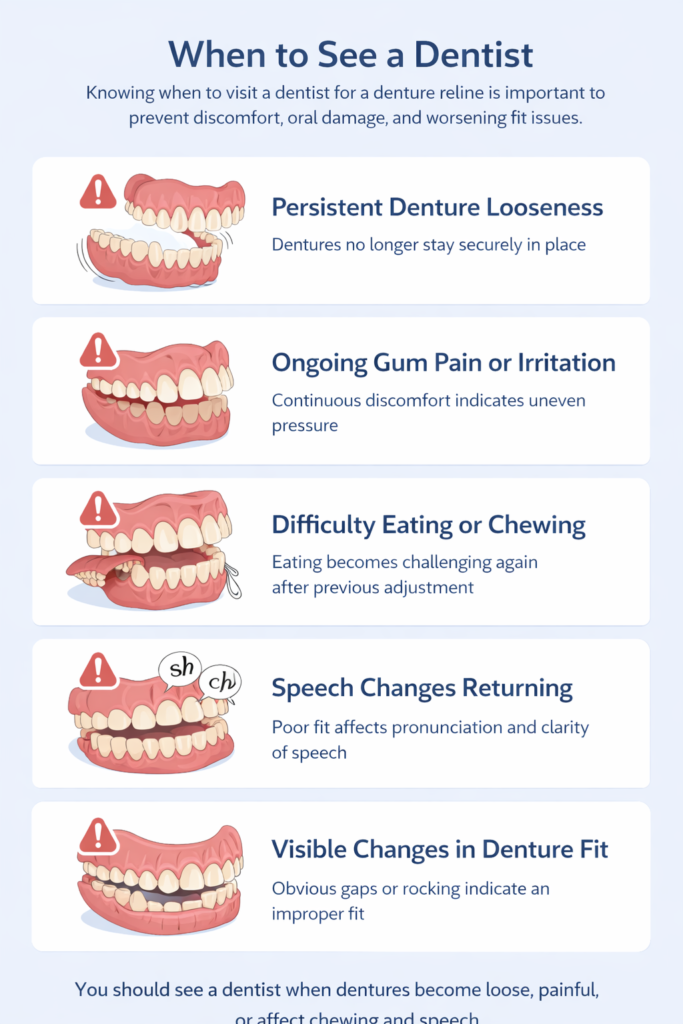
When to See a Dentist
Knowing when to visit a dentist for a denture reline is important to prevent discomfort, oral damage, and worsening fit issues. Early intervention helps maintain proper function and avoids more complex treatments later.
Persistent Denture Looseness
If dentures no longer stay securely in place, it is a clear sign that professional adjustment is needed.
Warning signs:
- Dentures slip while talking or eating
- Constant need for denture adhesive
- Poor suction or grip
Ongoing Gum Pain or Irritation
Continuous discomfort indicates that the denture is putting uneven pressure on the gums.
Symptoms include:
- Red or inflamed gum areas
- Pain while wearing dentures
- Development of recurring sores
Difficulty Eating or Chewing
If eating becomes challenging again after previous adjustment, the fit may have changed.
Indicators:
- Trouble biting harder foods
- Food slipping from dentures
- Reduced chewing efficiency
Speech Changes Returning
A poor fit can affect pronunciation and clarity of speech.
Signs to watch:
- Slurred or unclear speech
- Clicking or movement during talking
- Difficulty forming certain sounds
Visible Changes in Denture Fit
Physical signs of poor fit should never be ignored.
Examples:
- Gaps between gums and denture
- Denture rocking or tilting
- Uneven contact on one side
Summary
You should see a dentist when dentures become loose, painful, or affect chewing and speech. These symptoms indicate that the fit has changed and a reline or adjustment is necessary to restore comfort and function.
Keypoints
- Loose dentures are a primary reason for dental visits
- Persistent gum pain indicates poor fit
- Eating and speech difficulties signal adjustment needs
- Visible denture movement should not be ignored
- Early consultation prevents further oral complications
Common Mistakes and Misconceptions About Denture Reline
Many denture users misunderstand how relining works, which can lead to poor maintenance decisions, discomfort, or delayed treatment. Clearing these misconceptions helps ensure better oral health outcomes and longer denture lifespan.
Ignoring Early Fit Problems
One of the most common mistakes is delaying dental visits when dentures start feeling loose.
Why it’s a problem:
- Gum irritation worsens over time
- Bone and tissue changes continue unchecked
- Dentures become more unstable
Using Denture Adhesive as a Permanent Fix
Many users rely heavily on adhesives instead of seeking professional relining.
Misconception:
- Adhesive can permanently fix loose dentures
Reality:
- Adhesives only provide temporary stability
- They do not correct underlying fit issues
Assuming Relining Is Only Needed Once
Some patients believe a single reline will last forever.
Reality:
- Mouth shape continues to change with time
- Regular adjustments or multiple relines are often required
- Periodic dental checkups are essential
Trying DIY Denture Reline Kits Without Supervision
Over-the-counter kits are sometimes used without professional guidance.
Risks include:
- Improper fit and alignment
- Gum irritation or injury
- Damage to denture material
Confusing Reline with Full Denture Replacement
Reline is often misunderstood as a full denture solution.
Clarification:
- Reline adjusts existing dentures
- Replacement is needed only when dentures are severely damaged or outdated
Summary
Common mistakes such as ignoring loose dentures, overusing adhesives, or relying on DIY kits can lead to long-term oral problems. Understanding the correct purpose of denture relining ensures better comfort, safety, and durability.
Keypoints
- Early denture problems should not be ignored
- Adhesives are not a permanent solution
- Relining is a recurring maintenance process
- DIY kits can cause harm if misused
- Reline is not the same as full denture replacement
Summary
Denture relining is a restorative dental procedure that improves the fit of existing dentures by reshaping their inner surface to match changes in the gums and jawbone. Over time, natural bone resorption and tissue changes cause dentures to become loose, leading to discomfort, reduced chewing ability, and speech difficulties.
Relining helps restore stability, comfort, and function without requiring full denture replacement. It is available in different forms such as soft relines for sensitive gums, hard relines for long-term durability, and chairside or lab-based procedures depending on time and precision needs. The procedure is generally cost-effective and widely used as a maintenance solution for denture wearers.
However, relining is not permanent. Its effectiveness depends on ongoing oral changes, material type, and proper maintenance. Regular dental checkups are essential to ensure continued fit and to determine when a new reline or replacement may be needed.
Keypoints
- Denture reline improves fit by adjusting the inner surface of dentures
- Needed due to natural gum and bone changes over time
- Comes in soft, hard, chairside, and lab-based types
- More affordable than full denture replacement
- Temporary solution requiring periodic dental evaluation
Frequently Asked Questions (FAQs)
What is a denture reline?
A denture reline is a dental procedure that reshapes the inner surface of a denture to improve its fit after changes in the gums and jawbone. It helps restore comfort, stability, and chewing ability without replacing the entire denture.
How often do dentures need to be relined?
Most dentures need relining every 1 to 5 years depending on oral changes, denture type, and usage. Soft relines may need more frequent replacement, while hard or lab relines last longer.
Is denture relining painful?
No, denture relining is generally not painful. Some patients may experience mild pressure or temporary soreness after the procedure as the gums adjust to the improved fit.
How long does a denture reline take?
A chairside denture reline can be completed in a single dental visit, usually within 1–2 hours. Lab relines take a few days but offer more precise and durable results.
What is the difference between reline and replacement?
A reline adjusts the inner surface of an existing denture to improve fit, while replacement involves creating a completely new denture. Relining is more cost-effective and used when dentures are still in good condition.
Can I reline my dentures at home?
Home denture reline kits are available, but they are not recommended for long-term use. Professional relining ensures proper fit, safety, and prevents damage to the denture or gums.
How do I know if I need a denture reline?
You may need a reline if your dentures feel loose, cause gum irritation, affect speech, or make chewing difficult. These signs indicate that the fit has changed due to natural gum and bone movement.
References
- American Dental Association (ADA) – Denture Care and Maintenance Guidelines
- World Health Organization (WHO) – Oral Health Fact Sheets and Reports
- Mayo Clinic – Dentures: Care, Problems, and Adjustments Information
- Cleveland Clinic – Dentures and Dental Prosthetics Overview
- National Institute of Dental and Craniofacial Research (NIDCR) – Tooth Replacement and Prosthodontics Resources
- British Dental Association (BDA) – Patient Information on Dentures and Relining
Summary
The information in this article is based on widely accepted dental health guidelines and prosthodontic practices from leading global health and dental organizations. These sources provide evidence-based insights into denture maintenance, relining procedures, and oral health care standards.
Keypoints
- Content is supported by globally recognized dental and health organizations
- Includes prosthodontic and oral healthcare best practices
- Based on evidence-driven clinical guidelines
- Focused on safe, standard denture care recommendations