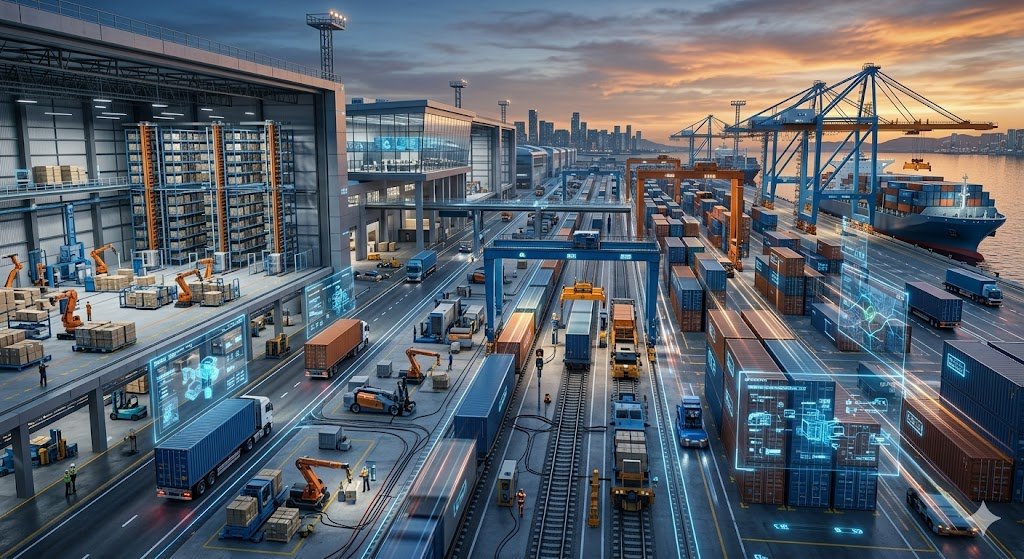
A private freight terminal is a logistics facility owned and operated by private companies to manage the handling, storage, and movement of cargo within a supply chain. These terminals act as controlled hubs where goods are transferred between transport modes such as trucks, trains, and ships, ensuring faster, more efficient freight movement compared to unmanaged or congested public facilities.
In modern logistics systems, private freight terminals play a critical role in reducing delays, improving cargo visibility, and optimizing distribution networks. They are commonly used by major logistics providers such as DHL, FedEx, Maersk, and UPS to streamline global and regional supply chain operations.
A private freight terminal is a privately owned logistics hub where cargo is received, stored, processed, and transferred between transport modes. It is designed to improve supply chain efficiency by reducing congestion, increasing handling speed, and enabling better control over freight operations compared to public terminals.
Key Functions Overview
- Cargo unloading and loading from multiple transport modes
- Temporary storage and warehousing of goods
- Coordination of intermodal transport (road, rail, sea)
- Real-time tracking and inventory control
- Streamlined customs and documentation handling (in international trade contexts)
Why Private Freight Terminals Matter in Logistics
Private freight terminals are essential in modern supply chain ecosystems because they:
- Reduce dependency on overloaded public ports and terminals
- Improve turnaround time for cargo processing
- Enable businesses to control logistics operations internally
- Support automation and digital tracking systems for efficiency
- Increase reliability in time-sensitive shipments
Summary Box
Private freight terminals are privately controlled logistics hubs that enhance cargo handling efficiency, reduce congestion in public infrastructure, and improve supply chain performance through faster processing and better operational control.
Key Takeaways
- They are owned and managed by private organizations
- They connect multiple transport systems for smooth cargo flow
- They improve speed, visibility, and efficiency in logistics
- They are widely used in global trade and e-commerce supply chains
Read also:https://capitallooms.com/cabrando/
Meaning and Definition of Private Freight Terminals
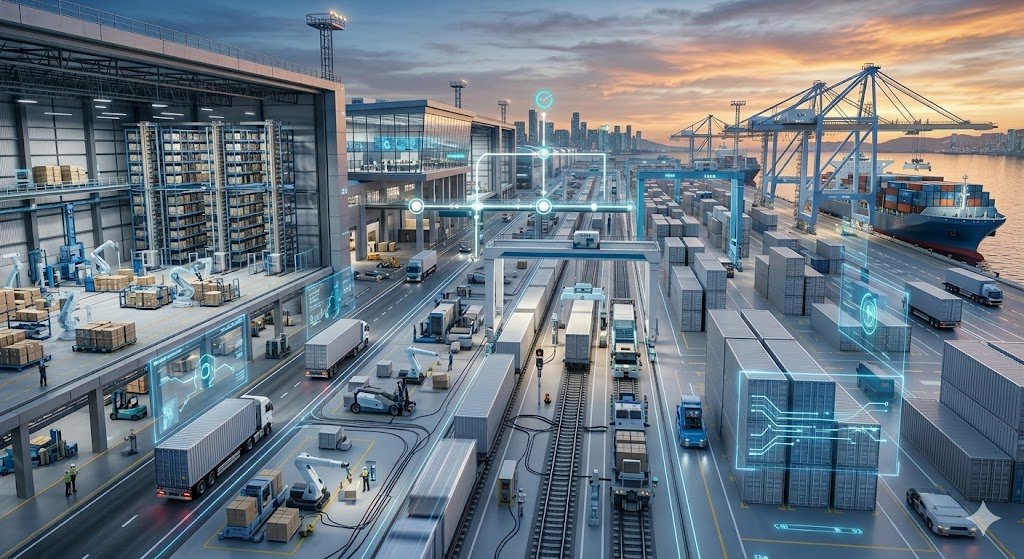
A private freight terminal is a dedicated logistics facility owned, funded, and operated by a private organization to manage the efficient movement of cargo across different transport systems. It functions as a centralized node where goods are received, sorted, temporarily stored, and redistributed through road, rail, or sea networks.
Unlike public freight terminals that are managed by government or port authorities, private freight terminals are designed for specific business operations or supply chain networks. This allows companies to maintain greater control over cargo flow, reduce operational delays, and implement customized logistics systems tailored to their ne
A private freight terminal is a privately owned logistics hub used for handling, storing, and transferring cargo between transportation modes. It improves supply chain efficiency by offering controlled operations, faster processing times, and integrated logistics management compared to publicly operated freight terminals.
Core Characteristics of Private Freight Terminals
- Owned and operated by private companies or logistics providers
- Designed for high-efficiency cargo handling and distribution
- Integrated with multimodal transport systems (road, rail, sea)
- Equipped with digital tracking and inventory systems
- Optimized for specific industries or supply chain networks
Step-by-Step Functional Definition (How It Operates)
- Cargo arrives via truck, ship, or train
- Goods are unloaded at designated docking areas
- Items are scanned and registered into logistics systems
- Cargo is temporarily stored in warehouses or yards
- Orders are sorted based on destination or delivery route
- Goods are dispatched through appropriate transport channels
Comparison Table: Private vs Public Freight Terminals
| Feature | Private Freight Terminal | Public Freight Terminal |
|---|---|---|
| Ownership | Private companies | Government or port authority |
| Control | High operational control | Shared control |
| Efficiency | High, optimized workflows | Moderate, congestion-prone |
| Customization | Fully customizable systems | Standardized operations |
| Cost Structure | Higher investment, optimized ROI | Lower entry cost, less flexibility |
Key Entities in Private Freight Terminal Ecosystem
- Logistics companies: DHL, FedEx, Maersk
- Tracking systems: RFID, GPS-based tracking, barcode scanning
- Management systems: Warehouse Management System (WMS), Transport Management System (TMS)
- Transport modes: Rail freight, trucking fleets, container shipping
Summary Box
Private freight terminals are privately operated logistics hubs that manage cargo movement across transport networks with higher efficiency, customization, and operational control than public freight facilities.
Key Takeaways
- They are privately owned and purpose-built logistics hubs
- They support multimodal cargo transportation systems
- They offer higher efficiency through automation and control
- They are widely used in global supply chain operations
How Private Freight Terminals Operate
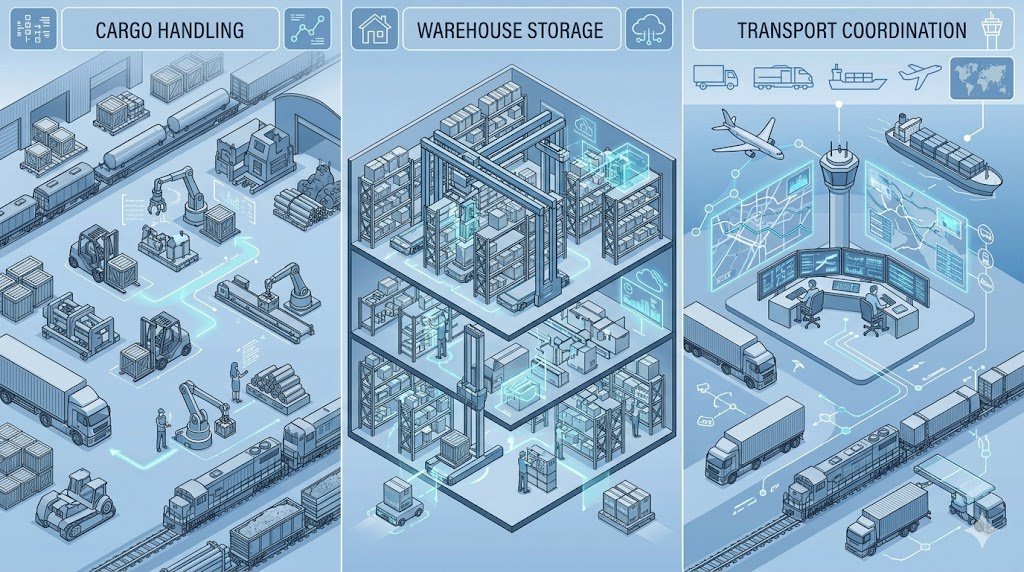
Private freight terminals operate as highly coordinated logistics hubs where cargo is systematically received, processed, stored, and dispatched using integrated transport and digital management systems. Their primary goal is to ensure fast, accurate, and cost-efficient movement of goods within domestic and international supply chains.
These terminals rely on synchronized operations between physical infrastructure (docks, cranes, warehouses) and digital systems (tracking software, inventory databases, and scheduling platforms) to maintain continuous cargo flow without delays or bottlenecks.
Private freight terminals operate by receiving cargo from transport vehicles, registering it into a digital system, temporarily storing it in warehouses, and redistributing it through optimized transport routes. The process is coordinated using logistics software to ensure speed, accuracy, and efficiency in supply chain movement.
Step-by-Step Operational Workflow
| Stage | Process Description |
|---|---|
| 1. Arrival | Cargo arrives via truck, rail, or ship |
| 2. Unloading | Goods are unloaded using cranes or forklifts |
| 3. Registration | Items are scanned into tracking systems |
| 4. Inspection | Quality and documentation checks are performed |
| 5. Storage | Cargo is placed in warehouses or yard zones |
| 6. Sorting | Goods are grouped by destination or priority |
| 7. Dispatch | Freight is loaded onto outbound transport |
Core Operational Components
- Inbound logistics management (receiving goods efficiently)
- Cargo handling systems (automated cranes, forklifts, conveyor systems)
- Warehouse coordination (storage optimization and inventory tracking)
- Transport scheduling systems (route and delivery optimization)
- Digital tracking platforms for real-time visibility
Role of Technology in Operations
Modern private freight terminals heavily depend on advanced logistics technologies, including:
- Warehouse Management Systems (WMS)
- Transport Management Systems (TMS)
- RFID and barcode scanning systems
- GPS-based fleet tracking
- Automated sorting and loading systems
These technologies reduce human error, improve speed, and enable real-time decision-making in cargo movement.
Key Entities Involved in Operations
- Logistics providers: DHL, FedEx
- Shipping operators: Maersk
- Supply chain systems: WMS, TMS, ERP logistics modules
- Equipment: container cranes, forklifts, automated stacking systems
Summary Box
Private freight terminals operate through a structured workflow that combines cargo handling, digital tracking, and transport coordination to ensure efficient and uninterrupted movement of goods across supply chains.
Key Takeaways
- Operations are structured in sequential logistics stages
- Technology plays a central role in efficiency and accuracy
- Cargo flows through controlled inbound and outbound systems
- Automation reduces delays and operational errors
Core Infrastructure Components of Private Freight Terminals
Private freight terminals depend on a combination of physical infrastructure and advanced logistics systems to handle large volumes of cargo efficiently. Each component is designed to support specific stages of freight movement, from arrival and unloading to storage and dispatch.
These infrastructures are engineered to maximize throughput, minimize delays, and enable seamless coordination between different transport modes such as road, rail, and maritime shipping.
Featured Snippet-Ready Definition (45–55 words)
The core infrastructure of a private freight terminal includes docks, warehouses, container yards, cranes, transport access points, and digital management systems. These components work together to ensure efficient cargo handling, secure storage, and smooth transfer between different transportation modes in the supply chain.
Main Infrastructure Components
1. Docking and Loading Bays
- Entry and exit points for trucks, trains, and shipping containers
- Equipped with safety systems and cargo alignment tools
- Designed for rapid loading/unloading operations
2. Container Yards
- Open storage areas for shipping containers
- Organized by destination, cargo type, or priority
- Often equipped with automated stacking cranes
3. Warehousing Facilities
- Indoor storage for goods requiring protection from weather or damage
- Includes temperature-controlled storage for sensitive goods
- Integrated with inventory management systems
4. Cargo Handling Equipment
- Cranes, forklifts, conveyor belts, and automated stacking systems
- Reduces manual labor and improves operational speed
- Ensures safe movement of heavy or fragile cargo
5. Transport Connectivity Infrastructure
- Rail sidings for train-based freight movement
- Road networks for trucking and last-mile delivery
- Port connectivity for international shipping routes
6. Digital Control Systems
- Warehouse Management System (WMS)
- Transport Management System (TMS)
- Real-time tracking and RFID scanning systems
Infrastructure Comparison Table
| Component | Function | Importance Level |
|---|---|---|
| Warehouses | Storage and protection of cargo | High |
| Container yards | Temporary container holding | High |
| Docks | Loading/unloading operations | Critical |
| Digital systems | Tracking and coordination | Critical |
| Transport links | Connectivity to supply chain | Critical |
Role of Automation in Infrastructure
Modern private freight terminals increasingly integrate automation to improve efficiency:
- Automated stacking cranes for container handling
- Smart sensors for cargo tracking
- AI-based scheduling for transport coordination
- Robotics in warehouse sorting operations
These systems significantly reduce operational delays and improve accuracy in cargo management.
Key Entities in Infrastructure Ecosystem
- Logistics operators: DHL, UPS
- Shipping industry: Maersk
- Technology systems: WMS, TMS, RFID, ERP logistics modules
- Infrastructure equipment manufacturers: crane systems, automated handlers
Summary Box
Private freight terminals are built on integrated infrastructure systems including docks, warehouses, container yards, transport links, and digital platforms that collectively ensure efficient and scalable cargo operations.
Key Takeaways
- Infrastructure is a mix of physical and digital systems
- Each component supports a specific logistics function
- Automation improves speed, safety, and efficiency
- Strong transport connectivity is essential for performance
Types of Freight Terminals in Logistics Systems
Freight terminals are categorized based on ownership, function, and the type of cargo they handle. Understanding these types helps clarify where private freight terminals fit within the broader logistics ecosystem and how they differ from other terminal models used in global supply chains.
Each type of terminal plays a specific role in ensuring efficient cargo movement between production centers, distribution hubs, and end markets.
Featured Snippet-Ready Definition (45–55 words)
Freight terminals are classified into private, public, and hybrid types based on ownership and operational control. Private freight terminals are managed by companies for optimized cargo handling, while public terminals are government-run facilities serving general trade and hybrid terminals combine both private efficiency and public accessibility.
Main Types of Freight Terminals
1. Private Freight Terminals
- Owned and operated by private logistics or industrial companies
- Designed for internal or contracted supply chain operations
- Offer high efficiency, automation, and customized workflows
- Focus on speed, control, and cost optimization
2. Public Freight Terminals
- Managed by government or port authorities
- Open access for multiple shipping and logistics companies
- Handle large volumes of general cargo
- Often face congestion and standardized operational procedures
3. Hybrid Freight Terminals
- Jointly operated by public authorities and private firms
- Combine infrastructure access with private efficiency models
- Used in major international ports and trade hubs
- Balance profitability and public service obligations
4. Intermodal Freight Terminals
- Designed for seamless transfer between transport modes
- Support rail, road, and sea cargo integration
- Focus on containerized freight movement efficiency
- Critical for global trade logistics networks
Comparison Table: Freight Terminal Types
| Type | Ownership | Efficiency | Accessibility | Customization |
|---|---|---|---|---|
| Private | Private companies | High | Limited | High |
| Public | Government | Moderate | Open | Low |
| Hybrid | Mixed | High | Partial | Medium |
| Intermodal | Varies | High | Network-based | Medium |
Role of Private Freight Terminals in the System
Private freight terminals stand out due to their ability to:
- Optimize internal supply chain operations
- Reduce dependency on public infrastructure
- Implement advanced automation systems
- Improve delivery speed and reliability
- Customize workflows for specific industries
They are especially important for large logistics providers such as DHL, FedEx, and global shipping operators like Maersk.
Summary Box
Freight terminals are divided into private, public, hybrid, and intermodal systems, each serving different logistics needs. Private freight terminals offer the highest level of control, efficiency, and customization within modern supply chain networks.
Key Takeaways
- Freight terminals are categorized by ownership and function
- Private terminals prioritize efficiency and control
- Public terminals focus on accessibility and shared use
- Hybrid models balance private efficiency with public access
- Intermodal terminals enable multi-transport integration
Private vs Public Freight Terminals Comparison
Private and public freight terminals serve the same fundamental purpose—handling, storing, and transferring cargo—but they differ significantly in ownership, efficiency, operational control, and flexibility. Understanding these differences is essential for evaluating their role in modern logistics and supply chain systems.
Private freight terminals are designed for optimized performance under controlled environments, while public terminals prioritize accessibility and shared infrastructure for multiple stakeholders.
Featured Snippet-Ready Comparison (45–55 words)
Private freight terminals are owned by companies and offer high efficiency, automation, and control, while public freight terminals are government-managed facilities designed for open access and general cargo handling. Private terminals prioritize speed and customization, whereas public terminals focus on availability and shared logistics services.
Key Differences Overview
1. Ownership & Control
- Private Freight Terminals: Owned by private logistics firms or corporations
- Public Freight Terminals: Managed by government or port authorities
2. Operational Efficiency
- Private terminals operate with optimized workflows and automation
- Public terminals often face congestion due to shared usage
3. Accessibility
- Private: Restricted to specific companies or contracts
- Public: Open to multiple shipping and logistics operators
4. Customization Level
- Private: Fully customizable logistics systems and processes
- Public: Standardized operations with limited flexibility
5. Cost Structure
- Private: High initial investment, but optimized long-term ROI
- Public: Lower entry cost but less operational efficiency
Detailed Comparison Table
| Feature | Private Freight Terminal | Public Freight Terminal |
|---|---|---|
| Ownership | Private companies | Government/port authority |
| Efficiency | High (automated systems) | Moderate (shared usage) |
| Accessibility | Restricted | Open access |
| Customization | High | Low |
| Congestion Level | Low | Often high |
| Investment Cost | High | Lower |
| Control Level | Full control | Shared control |
Operational Impact Comparison
Private Freight Terminals
- Faster cargo processing cycles
- Reduced waiting and congestion times
- Integration with advanced systems like WMS and TMS
- Better tracking and real-time visibility
Public Freight Terminals
- Serve a wide range of shipping companies
- Handle large volumes of general cargo
- More prone to scheduling delays
- Depend on standardized infrastructure systems
Industry Usage Examples
Private freight terminals are widely used by global logistics leaders such as DHL, FedEx, and shipping operators like Maersk to improve supply chain efficiency and reduce operational delays.
Summary Box
Private freight terminals offer higher efficiency, control, and customization, while public freight terminals focus on accessibility and shared logistics services. The choice between them depends on business scale, cost strategy, and operational requirements.
Key Takeaways
- Private terminals are efficiency-driven and controlled by companies
- Public terminals are shared infrastructure managed by governments
- Private systems reduce delays through automation and optimization
- Public systems prioritize accessibility over customization
- Both play essential roles in global logistics networks
Role of Private Freight Terminals in Modern Supply Chain Networks
Private freight terminals are a critical backbone of modern supply chain systems because they function as controlled logistics hubs that connect production, storage, and distribution processes. They reduce inefficiencies in cargo movement by integrating transport modes, improving coordination, and enabling faster delivery cycles.
In today’s global trade environment, where speed and reliability are essential, private freight terminals help companies maintain consistent supply chain performance even under high demand or complex shipping conditions.
Featured Snippet-Ready Explanation (45–55 words)
Private freight terminals play a key role in supply chains by acting as efficient cargo hubs that connect transportation networks, streamline goods movement, and reduce delays. They improve coordination between suppliers, warehouses, and distributors, ensuring faster, more reliable delivery across domestic and international logistics systems.
Core Roles in Supply Chain Systems
1. Cargo Consolidation Hub
- Combines shipments from multiple sources
- Reduces transportation costs through bulk handling
- Improves load optimization for transport vehicles
2. Distribution Coordination Center
- Organizes outgoing shipments based on destination
- Ensures timely delivery to retail and industrial endpoints
- Supports last-mile logistics planning
3. Inventory Buffer Zone
- Temporarily stores goods to balance supply and demand
- Helps prevent supply chain disruptions
- Maintains stock availability during peak demand
4. Intermodal Connectivity Node
- Links road, rail, and maritime transport systems
- Enables smooth transfer of containers between modes
- Reduces dependency on a single transport method
Supply Chain Flow Integration Table
| Stage | Role of Private Freight Terminal |
|---|---|
| Production | Receives manufactured goods |
| Consolidation | Groups shipments efficiently |
| Storage | Temporarily holds inventory |
| Distribution | Routes goods to destinations |
| Delivery | Supports final transport stage |
Impact on Global Logistics Efficiency
Private freight terminals significantly enhance supply chain performance by:
- Reducing transit delays through centralized operations
- Increasing shipment tracking accuracy with digital systems
- Lowering transportation costs through optimized routing
- Improving resilience against port congestion and disruptions
- Supporting just-in-time (JIT) inventory models
Integration with Logistics Leaders
Global logistics companies such as DHL, FedEx, and shipping giant Maersk rely on private freight terminals to maintain efficient global distribution networks and ensure seamless cargo flow across continents.
Summary Box
Private freight terminals act as strategic supply chain hubs that connect production, storage, and distribution systems, enabling faster, more reliable, and cost-efficient global logistics operations.
Key Takeaways
- They function as central nodes in supply chains
- Improve coordination between transport and storage systems
- Reduce delays and improve delivery reliability
- Support intermodal transport integration
- Enhance global logistics efficiency and scalability
Technology and Automation in Private Freight Terminals
Technology and automation are transforming private freight terminals into highly efficient, data-driven logistics hubs. Modern terminals no longer rely solely on manual handling; instead, they use integrated digital systems and automated equipment to improve speed, accuracy, and operational control across the entire cargo lifecycle.
These advancements allow private freight terminals to handle larger cargo volumes with fewer errors, reduced delays, and optimized resource utilization.
Featured Snippet-Ready Explanation (45–55 words)
Private freight terminals use advanced technologies like automation systems, RFID tracking, and logistics software to streamline cargo handling and transport coordination. These tools improve efficiency, reduce manual errors, and provide real-time visibility of goods, making supply chain operations faster, more accurate, and more reliable.
Core Technologies Used in Private Freight Terminals
1. Warehouse Management System (WMS)
- Manages inventory storage and movement
- Tracks goods in real time
- Optimizes warehouse space utilization
2. Transport Management System (TMS)
- Plans and schedules freight movement
- Optimizes delivery routes and transport costs
- Coordinates between different transport modes
3. RFID and Barcode Systems
- Enables fast cargo identification and tracking
- Reduces manual scanning errors
- Provides real-time shipment updates
4. GPS Tracking Systems
- Monitors fleet movement and delivery progress
- Improves route optimization
- Enhances transparency in logistics operations
5. Automated Cargo Handling Equipment
- Robotic cranes and automated stacking systems
- Conveyor belts for sorting and movement
- Forklift automation in warehouse operations
Automation Workflow Table
| Stage | Technology Used | Function |
|---|---|---|
| Cargo arrival | RFID / Barcode scanners | Identification & registration |
| Storage | WMS | Inventory management |
| Sorting | Automated systems | Cargo classification |
| Transport planning | TMS | Route optimization |
| Delivery tracking | GPS systems | Real-time monitoring |
Benefits of Automation in Freight Terminals
- Faster cargo processing and reduced turnaround time
- Lower operational costs due to reduced manual labor
- Improved accuracy in inventory and shipment tracking
- Enhanced safety in cargo handling operations
- Better scalability for high-volume logistics demands
Role of Data and AI in Modern Terminals
Modern private freight terminals increasingly use data analytics and artificial intelligence to:
- Predict cargo demand and optimize storage space
- Improve scheduling and reduce bottlenecks
- Automate decision-making in routing and dispatch
- Enhance predictive maintenance of equipment
These systems make logistics operations more intelligent and adaptive to changing supply chain conditions.
Industry Implementation Examples
Global logistics leaders such as DHL, FedEx, and UPS heavily invest in automation technologies to improve efficiency and maintain competitive supply chain performance.
Summary Box
Technology and automation are essential to modern private freight terminals, enabling faster cargo handling, real-time tracking, and intelligent logistics coordination across global supply chains.
Key Takeaways
- Automation reduces manual errors and improves speed
- Digital systems provide real-time cargo visibility
- AI and analytics optimize logistics decision-making
- RFID and GPS improve tracking accuracy
- WMS and TMS integrate entire supply chain operations
Advantages of Private Freight Terminals
Private freight terminals offer significant benefits to logistics operators, manufacturers, and global supply chain networks. Their primary advantage lies in their ability to deliver faster, more controlled, and highly optimized cargo handling compared to public freight infrastructure. These advantages make them a preferred choice for large-scale logistics companies and time-sensitive industries.
By integrating advanced systems, dedicated infrastructure, and streamlined workflows, private freight terminals enhance overall supply chain performance and reduce operational inefficiencies.
Featured Snippet-Ready Explanation (45–55 words)
Private freight terminals provide advantages such as faster cargo processing, improved operational control, reduced congestion, and enhanced supply chain efficiency. They use automation and dedicated infrastructure to optimize logistics performance, making them more reliable and efficient than public freight terminals for large-scale or time-sensitive operations.
Key Advantages Explained
1. Higher Operational Efficiency
- Streamlined cargo handling processes
- Reduced waiting and turnaround time
- Optimized workflows for continuous operations
2. Greater Control Over Logistics
- Full control over scheduling and cargo movement
- Customized processes based on business needs
- Reduced dependency on external operators
3. Faster Cargo Processing
- Automated loading and unloading systems
- Real-time tracking and coordination
- Reduced delays in transfer between transport modes
4. Improved Supply Chain Reliability
- Fewer bottlenecks compared to public terminals
- Consistent performance even during high demand
- Better risk management and contingency planning
5. Advanced Technology Integration
- Use of WMS and TMS systems
- RFID and GPS-based tracking
- AI-driven logistics optimization
Advantages Comparison Table
| Advantage | Impact on Logistics |
|---|---|
| Efficiency | Faster cargo movement |
| Control | Better operational management |
| Technology | Improved accuracy and tracking |
| Reliability | Stable supply chain performance |
| Customization | Industry-specific optimization |
Business Impact Benefits
Private freight terminals directly improve business performance by:
- Reducing transportation and storage costs
- Increasing delivery speed and customer satisfaction
- Enhancing inventory management accuracy
- Supporting just-in-time (JIT) supply chains
- Improving scalability for growing logistics demand
Industry Usage Examples
Leading logistics and shipping organizations such as DHL, FedEx, and Maersk utilize private freight terminal systems to maintain efficiency, reduce delays, and ensure global supply chain reliability.
Summary Box
Private freight terminals deliver major advantages including speed, control, automation, and supply chain reliability, making them highly effective for modern logistics operations and global trade networks.
Key Takeaways
- They improve speed and efficiency of cargo handling
- Provide full operational control to private operators
- Reduce delays and congestion in logistics flow
- Integrate advanced automation and tracking systems
- Enhance overall supply chain reliability
Limitations and Challenges of Private Freight Terminals
While private freight terminals offer high efficiency and advanced logistics control, they also come with several limitations and operational challenges. These challenges are often related to high infrastructure costs, regulatory compliance requirements, and dependency on advanced technology systems.
Understanding these limitations is important for evaluating the feasibility and long-term sustainability of private freight terminal investments in global supply chains.
Featured Snippet-Ready Explanation (45–55 words)
Private freight terminals face challenges such as high setup costs, complex regulatory compliance, dependency on advanced technology, and limited accessibility for smaller operators. Although they improve efficiency and control, these terminals require significant investment and ongoing maintenance to ensure smooth and scalable logistics operations.
Key Limitations Explained
1. High Infrastructure and Setup Costs
- Requires large capital investment for land, equipment, and technology
- Expensive automation systems and cargo handling machinery
- High maintenance and upgrade costs over time
2. Regulatory and Compliance Complexity
- Must comply with international trade and customs regulations
- Subject to safety, environmental, and transport laws
- Frequent audits and documentation requirements
3. Heavy Dependence on Technology
- Requires continuous system maintenance (WMS, TMS, RFID)
- Risk of operational disruption due to system failures
- Cybersecurity risks in digital logistics platforms
4. Limited Accessibility
- Often restricted to specific companies or contracts
- Not open for general public or multiple small operators
- Can reduce flexibility in shared logistics ecosystems
5. Skilled Workforce Requirement
- Needs trained logistics engineers and IT specialists
- High dependency on technical expertise for smooth operations
- Continuous staff training required for automation systems
Challenges Impact Table
| Challenge | Impact on Operations |
|---|---|
| High cost | Limits adoption by small businesses |
| Regulations | Increases operational complexity |
| Technology reliance | Risk of system downtime |
| Limited access | Reduced flexibility in usage |
| Skilled labor | Higher training requirements |
Operational Risks in Private Freight Terminals
- System downtime can halt entire logistics operations
- Equipment failures may delay cargo movement
- Cybersecurity threats can compromise tracking data
- Regulatory delays can slow down international shipments
- High fixed costs reduce flexibility during low-demand periods
Industry Context
Even major logistics leaders such as DHL, FedEx, and shipping operators like Maersk must continuously invest in maintenance, cybersecurity, and compliance systems to manage these challenges effectively.
Summary Box
Despite their efficiency, private freight terminals face challenges including high costs, regulatory complexity, technology dependency, and limited accessibility, which require strong operational planning and investment.
Key Takeaways
- High setup and maintenance costs limit adoption
- Strict regulations increase operational complexity
- Technology dependence creates system risk exposure
- Access is often restricted to specific operators
- Skilled workforce is essential for smooth operations
Real-World Applications of Private Freight Terminals
Private freight terminals are widely used across global industries that depend on fast, reliable, and high-volume logistics operations. These facilities are not limited to one sector; instead, they support a broad range of economic activities including manufacturing, retail distribution, international shipping, and e-commerce fulfillment.
Their ability to integrate transport modes and optimize cargo flow makes them essential infrastructure for modern global trade networks.
Featured Snippet-Ready Explanation (45–55 words)
Private freight terminals are used in industries such as manufacturing, retail, e-commerce, and international shipping to streamline cargo handling and distribution. They improve supply chain efficiency by enabling faster transport coordination, reducing delays, and supporting large-scale logistics operations across global trade networks.
Key Industry Applications
1. Manufacturing Industry
- Receives raw materials and dispatches finished goods
- Ensures just-in-time (JIT) production support
- Reduces storage costs by improving supply flow
2. E-Commerce and Retail Distribution
- Enables fast order fulfillment and last-mile delivery
- Supports high-volume parcel sorting and distribution
- Integrates with automated warehouse systems
3. International Shipping and Trade
- Acts as a link between ports and inland logistics networks
- Handles container consolidation and deconsolidation
- Supports customs documentation and cargo clearance
4. Automotive and Heavy Industry
- Manages large and specialized cargo shipments
- Supports assembly line supply chains
- Coordinates transport of vehicle parts and machinery
5. Food and Pharmaceutical Supply Chains
- Maintains temperature-controlled logistics systems
- Ensures safe handling of perishable and sensitive goods
- Supports strict regulatory compliance requirements
Application Flow Table
| Industry | Role of Private Freight Terminal |
|---|---|
| Manufacturing | Raw material + finished goods handling |
| E-commerce | High-speed order distribution |
| Shipping | Container transfer and consolidation |
| Automotive | Heavy parts logistics coordination |
| Pharma/Food | Temperature-controlled transport support |
Importance in Global Trade
Private freight terminals play a crucial role in international commerce by:
- Reducing bottlenecks at public ports
- Speeding up customs clearance processes
- Improving cargo visibility across borders
- Supporting high-volume global trade routes
- Enhancing supply chain resilience during disruptions
Industry Usage Examples
Global logistics leaders such as DHL, FedEx, UPS, and shipping operator Maersk rely on private freight terminal systems to support their worldwide distribution and logistics networks.
Summary Box
Private freight terminals are essential across multiple industries, including manufacturing, retail, e-commerce, and international shipping, where they enable efficient cargo handling, faster delivery, and improved supply chain performance.
Key Takeaways
- Used across multiple high-demand industries
- Support fast and efficient cargo distribution
- Improve global trade and logistics connectivity
- Enable automation and large-scale operations
- Essential for modern e-commerce and manufacturing supply chains
Future of Private Freight Terminals
The future of private freight terminals is strongly shaped by automation, digital transformation, and global supply chain modernization. As trade volumes increase and customer expectations for faster delivery grow, these terminals are evolving into highly intelligent logistics ecosystems that rely on real-time data, artificial intelligence, and fully automated operations.
In the coming years, private freight terminals are expected to become more sustainable, more connected, and more autonomous, playing an even greater role in global logistics networks.
Featured Snippet-Ready Explanation (45–55 words)
The future of private freight terminals will focus on automation, AI-driven logistics, and real-time data integration. These terminals will become more efficient, sustainable, and interconnected, enabling faster cargo processing, reduced operational costs, and smarter global supply chain management.
Key Future Trends
1. Full Automation of Cargo Handling
- Autonomous cranes and robotic systems
- Automated loading and unloading operations
- Reduced dependency on manual labor
2. Artificial Intelligence in Logistics
- AI-based demand forecasting
- Predictive route optimization
- Smart scheduling and congestion reduction
3. Digital Twin Technology
- Virtual simulation of terminal operations
- Real-time monitoring and performance analysis
- Predictive maintenance of infrastructure
4. IoT and Real-Time Tracking Expansion
- Smart sensors on cargo and equipment
- End-to-end shipment visibility
- Instant data sharing across supply chain partners
5. Green and Sustainable Logistics
- Electric and low-emission cargo equipment
- Energy-efficient warehouse systems
- Reduced carbon footprint in freight operations
Future Technology Integration Table
| Technology | Expected Impact |
|---|---|
| AI & Machine Learning | Smarter logistics decisions |
| Automation Robotics | Faster cargo handling |
| IoT Sensors | Real-time tracking visibility |
| Digital Twins | Predictive operations management |
| Green Energy Systems | Sustainable logistics operations |
Impact on Global Supply Chains
Future private freight terminals will:
- Reduce global shipping delays through predictive logistics
- Improve resilience against supply chain disruptions
- Lower operational costs through automation
- Enhance transparency across international trade routes
- Enable fully connected logistics ecosystems
Industry Transformation Examples
Leading logistics and shipping companies such as DHL, FedEx, UPS, and maritime giant Maersk are already investing heavily in automation, AI, and digital logistics platforms to modernize freight terminal operations.
Summary Box
The future of private freight terminals will be defined by automation, AI integration, and sustainable logistics systems, making global supply chains faster, smarter, and more efficient.
Key Takeaways
- Automation will replace many manual logistics tasks
- AI will optimize routing, demand, and scheduling
- IoT will enable full cargo visibility
- Sustainability will become a core operational priority
- Terminals will become fully digital logistics ecosystems
Conclusion
Private freight terminals are advanced logistics hubs that play a vital role in modern supply chain systems by enabling efficient cargo handling, storage, and distribution. Their private ownership structure allows for greater control, faster operations, and higher customization compared to public freight terminals.
Throughout global trade networks, these terminals improve transportation efficiency by integrating road, rail, and maritime systems with digital technologies such as automation, tracking software, and AI-based logistics management. As a result, they significantly reduce delays, optimize costs, and enhance reliability in cargo movement.
Despite challenges such as high infrastructure costs, regulatory complexity, and dependence on advanced technology, the long-term benefits of private freight terminals make them essential for industries that require high-speed and large-scale logistics operations.
Looking ahead, the continued adoption of automation, artificial intelligence, and sustainable logistics practices will transform private freight terminals into fully intelligent, data-driven ecosystems that support the future of global trade.
Key Takeaways
- Private freight terminals improve efficiency and control in logistics operations
- They integrate multiple transport modes for seamless cargo movement
- Advanced technology plays a key role in their performance
- They face challenges but offer strong long-term value
- Future systems will be fully automated and AI-driven
Frequently Asked Questions (FAQs)
1. What is a private freight terminal used for?
A private freight terminal is used for handling, storing, and transferring cargo efficiently within a controlled logistics system. It supports faster movement of goods between transport modes like road, rail, and shipping networks.
2. How does a private freight terminal work?
It works by receiving cargo, registering it in a logistics system, storing it temporarily in warehouses or yards, and then dispatching it through optimized transport routes using digital tracking and coordination systems.
3. What is the difference between private and public freight terminals?
Private freight terminals are owned by companies and offer higher efficiency, automation, and control, while public freight terminals are government-managed, shared facilities with wider accessibility but often lower operational speed.
4. Who operates private freight terminals?
Private freight terminals are operated by logistics companies, manufacturing firms, or large corporations that require dedicated supply chain infrastructure for their cargo operations.
5. Are private freight terminals more efficient?
Yes, they are generally more efficient because they use automation, dedicated workflows, and advanced logistics systems that reduce delays and improve cargo handling speed.
6. What industries use private freight terminals the most?
Industries such as manufacturing, e-commerce, automotive, retail distribution, and international shipping heavily rely on private freight terminals for efficient logistics operations.
7. What technologies are used in private freight terminals?
They commonly use Warehouse Management Systems (WMS), Transport Management Systems (TMS), RFID tracking, GPS monitoring, and automated cargo handling equipment.
References Section
The following references are based on widely recognized logistics, supply chain, and transportation industry knowledge sources used in global freight and terminal operations research.
1. International Logistics & Supply Chain Authorities
- World Customs Organization (WCO) – Guidelines on cargo handling and customs processes
- International Maritime Organization (IMO) – Standards for maritime freight and port operations
- International Transport Forum (ITF – OECD) – Research on global freight systems and transport efficiency
2. Major Logistics and Freight Companies (Industry Practices)
- DHL – Global logistics and supply chain solutions documentation
- FedEx – Express logistics and freight terminal operations insights
- UPS – Supply chain management and distribution network systems
- Maersk – Maritime shipping and container terminal operations
3. Logistics Technology Standards
- Warehouse Management Systems (WMS) industry frameworks
- Transport Management Systems (TMS) operational models
- RFID and IoT tracking standards in supply chain logistics
- ISO logistics and supply chain management standards (ISO 9001, ISO 28000)
4. Academic & Industry Research Areas
- Supply Chain Management (SCM) journals and publications
- Intermodal transport and freight optimization studies
- Logistics automation and AI in supply chain research papers
- Port and terminal efficiency benchmarking studies
5. Key Concept Sources (General Knowledge Base)
- Freight forwarding and cargo handling principles
- Intermodal logistics and distribution network theory
- Modern warehouse automation and smart logistics systems
- Global trade and transportation infrastructure models
Final Note
This article is structured based on widely accepted logistics industry principles, global supply chain frameworks, and modern freight terminal operational models to ensure high informational