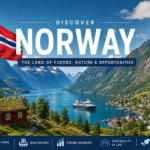
Scandinavia. It operates under a constitutional monarchy and is widely recognized for its strong democratic institutions, high standard of living, and advanced welfare system. The country consistently ranks among the top nations globally in human development, transparency, and quality of life.
Geographically, Norway occupies the western portion of the Scandinavian Peninsula, sharing borders with Sweden, Finland, and Russia. It is characterized by dramatic natural landscapes, including deep fjords, mountainous terrain, and an extensive coastline along the North Atlantic Ocean.
Politically, Norway is a stable democracy with a parliamentary system. The head of state is King Harald V, while executive power is exercised by an elected government. The country is not a member of the European Union but maintains close economic ties through the European Economic Area (EEA).
Economically, Norway is one of the wealthiest countries in the world, largely due to its abundant natural resources, particularly oil and natural gas. Revenue from these resources is managed through a sovereign wealth fund, which supports long-term economic stability and public welfare.
Summary
Norway is a highly developed Nordic nation known for:
- Strong democratic governance
- Resource-rich economy
- High quality of life
- Advanced social welfare system
- Unique natural landscapes
Keypoints
- Located in Northern Europe within Scandinavia
- Constitutional monarchy with a parliamentary system
- Among the highest GDP per capita globally
- Major exporter of oil and gas
- Not a member of the EU but closely integrated economically
Pros and Cons
Pros:
- High standard of living
- Strong healthcare and education systems
- Political stability and transparency
Cons:
- High cost of living
- Harsh winters in many regions
- Economic reliance on energy sector
Common Misconceptions
- Norway is always extremely cold → Climate varies significantly by region
- Norway is part of the EU → It is not, but participates in the EEA
- Economy depends only on oil → It is diversified with strong maritime and technology sectors
Also read :Norway Guide: Geography, Culture, Economy, Tourism & Facts
Norway is situated in Northern Europe on the western side of the Scandinavian Peninsula. It shares land borders with Sweden to the east, Finland to the northeast, and Russia in the far north. The country has an extensive coastline along the North Atlantic Ocean, including the Norwegian Sea and the Barents Sea.
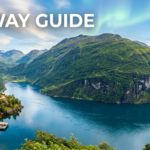
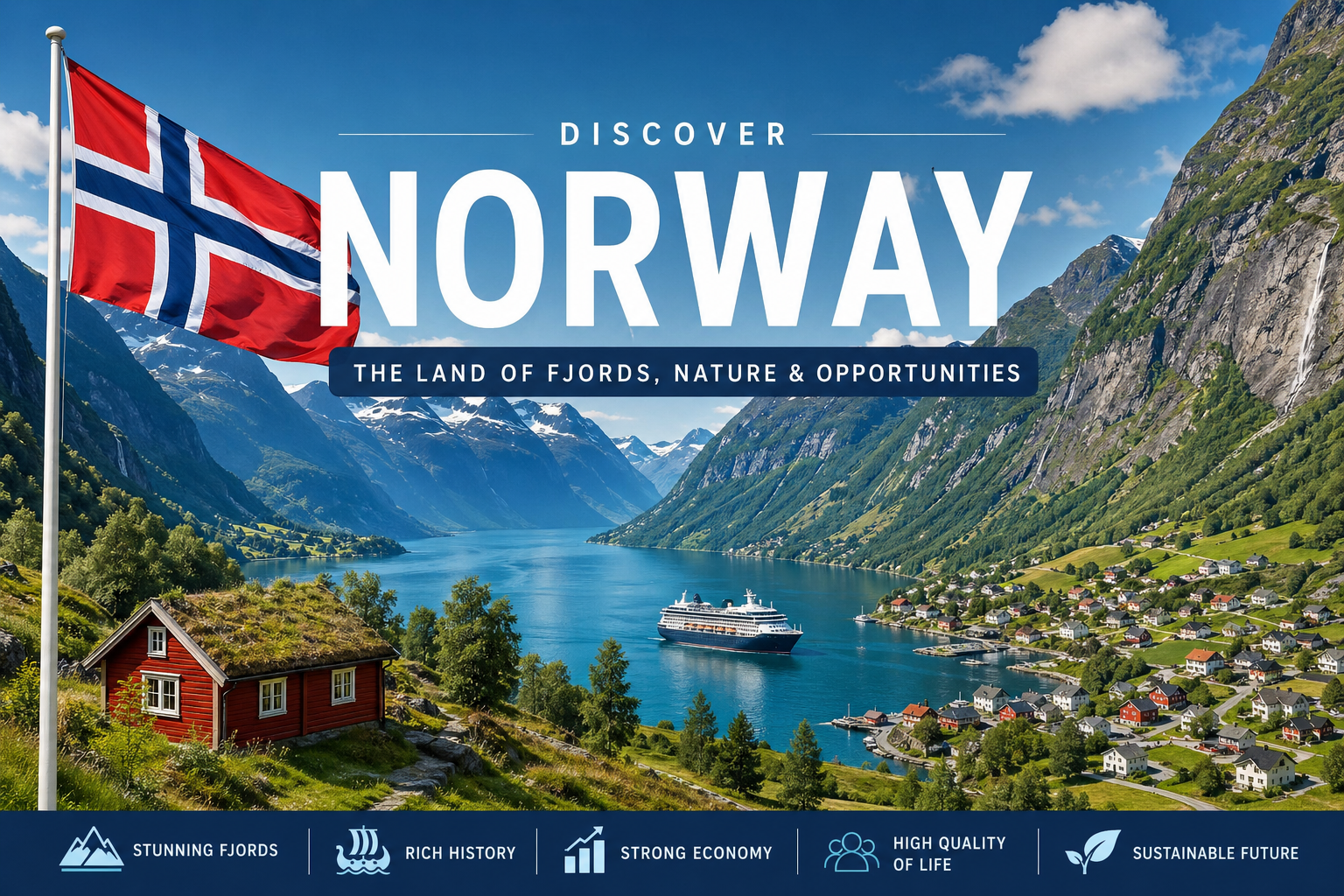
Norway is globally known for its rugged terrain and unique coastal geography. The landscape is dominated by mountains, valleys, and deep glacial fjords—long, narrow inlets formed by ancient glaciers. These fjords are one of the most defining physical features of the country and contribute significantly to its global recognition.
The country spans a wide latitudinal range, extending into the Arctic region. Areas above the Arctic Circle experience natural phenomena such as the Midnight Sun in summer and Polar Night in winter. This geographical positioning plays a key role in shaping Norway’s climate and biodiversity.
Climate Zones
Norway’s climate varies significantly despite its northern location due to the influence of the Gulf Stream. Coastal regions tend to have milder winters, while inland and northern areas experience colder temperatures.
| Region | Climate Type | Key Characteristics |
|---|---|---|
| Coastal Areas | Maritime Climate | Mild winters, cool summers |
| Inland Regions | Continental | Colder winters, warmer summers |
| Northern Norway | Subarctic/Arctic | Long winters, short cool summers |
Key Geographical Features
- Fjords: Deep coastal inlets shaped by glacial activity
- Mountains: Cover much of the land, limiting urban expansion
- Coastline: One of the longest in the world due to fjords and islands
- Arctic Regions: Include areas like Svalbard
Summary
Norway’s geography is defined by its mountainous terrain, extensive coastline, and Arctic location. Its unique natural features, especially fjords and northern latitude, strongly influence climate, lifestyle, and economic activities.
Keypoints
- Located on the Scandinavian Peninsula in Northern Europe
- Borders Sweden, Finland, and Russia
- Features dramatic fjords and mountainous landscapes
- Climate varies from mild coastal to Arctic conditions
- Experiences Midnight Sun and Polar Night in northern regions
Common Misconceptions
- Norway is entirely frozen → Coastal areas have relatively mild climates
- All regions have the same weather → Climate varies widely by geography
- Fjords are lakes → They are sea inlets formed by glaciers
History of Norway
The history of Norway spans from early human settlements to a modern, stable nation-state. Its development has been shaped by maritime culture, regional unions, and gradual political independence.
Early History and the Viking Age
Norway’s early history dates back to prehistoric times, but it gained prominence during the Viking Age (approximately 8th to 11th centuries). Norse seafarers from Norway explored, traded, and settled across parts of Europe, the North Atlantic, and beyond. This period established Norway’s strong maritime identity and cultural foundations.
Unions with Denmark and Sweden
From the late Middle Ages, Norway entered into political unions that significantly influenced its governance:
- Union with Denmark (1380–1814): Norway was governed from Copenhagen, with limited autonomy.
- Transfer to Sweden (1814–1905): After the Napoleonic Wars, Norway was ceded to Sweden but retained its own constitution and some internal independence.
Despite these unions, Norway maintained a distinct national identity, culture, and legal traditions.
Independence and Modern State Formation
In 1905, Norway peacefully dissolved its union with Sweden and became an independent constitutional monarchy. King Haakon VII was elected as the first monarch of modern independent Norway, marking the beginning of its current political system.
During World War II, Norway was occupied by Nazi Germany from 1940 to 1945. After the war, the country rebuilt its economy and strengthened its democratic institutions.
Post-War Development
Following World War II, Norway experienced significant economic growth, particularly after the discovery of oil and gas resources in the North Sea during the late 20th century. This transformed the country into a high-income economy with a strong welfare system.
Norway also became an active participant in international cooperation, joining organizations such as NATO while maintaining independence from the European Union.
Summary
Norway’s history reflects a transition from Viking-era exploration to foreign unions and ultimately full independence. Its modern identity is shaped by democratic governance, economic prosperity, and strong international engagement.
Keypoints
- Viking Age established Norway’s maritime legacy
- Long unions with Denmark and Sweden influenced governance
- Gained full independence in 1905
- Occupied during World War II and rebuilt afterward
- Oil discovery significantly boosted economic development
Common Misconceptions
- Norway has always been independent → It was under Danish and Swedish rule for centuries
- Vikings were only warriors → They were also traders and explorers
- Independence came through war → It was achieved peacefully in 1905
Government and Political System of Norway
Norway operates as a constitutional monarchy with a parliamentary system, combining a ceremonial monarch with an elected government. Its political structure is defined by democratic principles, separation of powers, and strong institutional stability.
Constitutional Monarchy Structure
The head of state is King Harald V, whose role is largely ceremonial. The monarch formally appoints the government and represents national unity but does not exercise direct political power.
The executive authority is led by the Prime Minister, who heads the government and is responsible for policy-making and administration.
Parliamentary System
Norway’s legislative power is held by the parliament, known as the Storting. It is a unicameral body responsible for:
- Passing laws
- Approving the national budget
- Overseeing the government
Members of parliament are elected through a proportional representation system, ensuring broad political representation.
Separation of Powers
The political system is divided into three branches:
- Executive: Government led by the Prime Minister
- Legislative: Parliament (Storting)
- Judicial: Independent courts ensuring rule of law
This structure ensures checks and balances within governance.
Political Stability and Governance
Norway is recognized globally for:
- Transparent governance
- Low corruption levels
- Strong rule of law
- High public trust in institutions
It consistently ranks among the top countries in global governance and democracy indices.
International Relations
Norway maintains active participation in global affairs. It is a member of organizations such as NATO and the United Nations. Although not part of the European Union, it participates in the European Economic Area (EEA), enabling access to the EU single market.
Summary
Norway’s political system is a stable constitutional monarchy supported by a democratic parliamentary framework. Power is balanced across institutions, ensuring accountability, transparency, and effective governance.
Keypoints
- Constitutional monarchy with a ceremonial king
- Parliamentary democracy with elected representatives
- Strong separation of powers
- High levels of transparency and political stability
- Active role in international organizations
Pros and Cons
Pros:
- Stable democratic system
- Low corruption and high trust
- Effective governance
Cons:
- Coalition governments can slow decision-making
- Limited direct power of the monarch may be misunderstood
Common Misconceptions
- The king rules the country → The monarch has a ceremonial role
- Norway is part of the EU → It is not, but participates economically through the EEA
- Government power is centralized → Power is distributed
Economy of Norway
The economy of Norway is one of the most advanced and stable in the world, characterized by high income levels, strong public finances, and significant natural resource wealth. It operates as a mixed economy, combining free-market activity with substantial government involvement, particularly in key sectors.
Key Economic Drivers
Norway’s economic strength is largely built on its natural resources and strategic management of wealth.
- Oil and Gas Industry:
Norway is a major global exporter of petroleum and natural gas, primarily from the North Sea. This sector contributes significantly to national income and exports. - Maritime and Shipping:
A long coastline and maritime tradition support shipping, fisheries, and offshore industries. - Renewable Energy:
Hydropower accounts for a large share of domestic electricity production, making Norway a leader in clean energy usage. - Technology and Services:
Growing sectors include information technology, finance, and innovation-driven industries.
Sovereign Wealth Fund
Norway manages its oil revenues through one of the world’s largest sovereign wealth funds, the Government Pension Fund Global. This fund is designed to:
- Preserve wealth for future generations
- Stabilize the economy against oil price fluctuations
- Support long-term fiscal sustainability
Economic Indicators
| Indicator | Description |
|---|---|
| GDP per capita | Among the highest globally |
| Main exports | Oil, gas, seafood, metals |
| Currency | Norwegian Krone (NOK) |
| Employment | High employment rate |
Role of Government
The government plays a significant role in the economy through:
- Regulation of natural resources
- Ownership stakes in key industries
- Redistribution through taxation and welfare programs
This model is often associated with the Nordic economic system, balancing efficiency with social equity.
Economic Strengths and Challenges
Strengths:
- Strong fiscal reserves
- Low unemployment
- Stable financial system
Challenges:
- Dependence on oil and gas revenues
- Exposure to global energy market fluctuations
- High cost of living
Summary
Norway’s economy is resource-rich, highly developed, and carefully managed through long-term financial planning. Its combination of natural wealth, strong institutions, and welfare policies supports sustained economic stability.
Keypoints
- One of the world’s wealthiest economies by GDP per capita
- Major exporter of oil and natural gas
- Large sovereign wealth fund ensures long-term stability
- Strong government role in economic management
- Increasing focus on diversification and sustainability
Pros and Cons
Pros:
- High economic stability
- Strong public services
- Effective wealth management
Cons:
- Reliance on energy sector
- High taxation levels
- Expensive living costs
Common Misconceptions
- Norway’s wealth is only from oil → It also has strong maritime, energy, and technology sectors
- The economy is fully state-controlled → It is a mixed economy with private participation
- Wealth is short-term → Long-term funds ensure sustainability
Population and Demographics of Norway
The population of Norway is relatively small compared to its geographic size, with just over 5 million people. The country has a low population density due to its mountainous terrain and harsh northern climate, resulting in most residents living in urban and coastal areas.
Population Distribution
The majority of the population is concentrated in the southern part of the country, particularly around the capital, Oslo. Other urban centers such as Bergen and Trondheim also hold significant populations, while northern and inland regions remain sparsely populated.
Ethnic Composition
Norway’s population is primarily ethnic Norwegian, with roots in Germanic and Nordic ancestry. However, the country has become increasingly diverse due to immigration.
- Indigenous group: Sami people (primarily in northern regions)
- Immigrant communities from Europe, Asia, and Africa
- Growing multicultural urban populations
Language
The official language is Norwegian, which has two written forms:
- Bokmål (most widely used)
- Nynorsk
In addition, Sami languages are officially recognized in certain regions, and English is widely spoken as a second language.
Demographic Characteristics
| Factor | Description |
|---|---|
| Population size | ~5.5 million |
| Urban population | Majority live in cities |
| Life expectancy | High (among top globally) |
| Birth rate | Relatively low |
Social Structure
Norwegian society is known for its high level of equality and strong social cohesion. Key characteristics include:
- Low income inequality
- High education levels
- Strong gender equality
- Well-developed welfare support systems
Summary
Norway has a small, highly developed population with a strong focus on equality, education, and quality of life. While traditionally homogeneous, it is becoming increasingly diverse due to global migration trends.
Keypoints
- Population of over 5 million with low density
- Majority live in southern urban areas
- Increasing cultural diversity
- Norwegian is the official language with two forms
- High life expectancy and strong social equality
Pros and Cons
Pros:
- High quality of life
- Strong social equality
- Well-educated population
Cons:
- Aging population trends
- Low birth rates
- Population concentration in limited areas
Common Misconceptions
- Norway is densely populated → It has low population density
- Everyone lives in rural areas → Most people live in cities
- Only one form of Norwegian exists → There are two official written forms
Culture and Society of Norway
The culture and society of Norway are shaped by its Nordic heritage, egalitarian values, and strong connection to nature. Norwegian society emphasizes equality, social welfare, and a balanced lifestyle, supported by well-developed public systems and cultural traditions.
Core Cultural Values
Norwegian culture is built around principles that influence daily life and social structure:
- Equality and Social Trust: Low income inequality and high trust in institutions
- Work-Life Balance: Emphasis on personal time, family, and outdoor activities
- Simplicity and Modesty: Cultural norm often associated with the concept of “Janteloven” (social equality mindset)
Traditions and National Identity
Norway maintains strong cultural traditions that reflect its history and identity:
- National celebrations such as Norwegian Constitution Day
- Folk traditions including traditional clothing (bunad)
- Cultural roots linked to the Viking era and rural heritage
Lifestyle and Society
Modern Norwegian society is highly developed and structured around welfare and inclusivity:
- Universal healthcare and education systems
- High levels of gender equality
- Strong environmental awareness and sustainability practices
Outdoor living is a key aspect of lifestyle, often described by the concept of “friluftsliv” (open-air living), encouraging regular interaction with nature.
Arts and Cultural Expression
Norway has a rich cultural scene influenced by both traditional and modern elements:
- Literature, music, and visual arts
- Strong support for cultural institutions
- Global recognition in creative industries
Religion and Beliefs
The majority of the population historically belongs to the Church of Norway (Lutheran), but society is largely secular today, with increasing religious diversity due to immigration.
Summary
Norwegian culture reflects a balance between tradition and modernity, characterized by equality, social welfare, and a deep connection to nature. These values contribute significantly to the country’s high quality of life and social stability.
Keypoints
- Strong emphasis on equality and social trust
- Rich traditions and national identity
- High standard of living supported by welfare systems
- Outdoor lifestyle deeply embedded in culture
- Increasing cultural diversity
Pros and Cons
Pros:
- Inclusive and equal society
- Strong public services
- High quality of life
Cons:
- High cost of living
- Social norms may feel reserved to outsiders
Common Misconceptions
- Norwegian culture is purely traditional → It is highly modern and progressive
- Society is uniform → It is becoming increasingly diverse
- People are socially distant → Cultural norms emphasize privacy, not isolation
Major Cities and Regions of Norway
Norway is divided into diverse regions, each characterized by unique geography, economic roles, and population distribution. While much of the country is sparsely populated, several key cities serve as economic, cultural, and administrative centers.
Major Cities
- Oslo
The capital and largest city, Oslo is the political, economic, and cultural hub of Norway. It hosts government institutions, major businesses, and international organizations. - Bergen
Located on the western coast, Bergen is known as the gateway to Norway’s fjords and plays a major role in maritime industries and tourism. - Trondheim
A historic city and former capital, Trondheim is an important center for education, technology, and research. - Stavanger
A key city for the oil and gas industry, Stavanger is often referred to as Norway’s energy capital.
Regional Structure
Norway is administratively divided into counties (fylker), which are grouped into broader geographical regions:
- Eastern Norway (Østlandet):
Most populated region, includes Oslo and surrounding urban areas - Western Norway (Vestlandet):
Known for fjords, coastal landscapes, and maritime economy - Central Norway (Trøndelag):
Mix of agriculture, technology, and historical significance - Northern Norway (Nord-Norge):
Sparsely populated, includes Arctic regions and Sami cultural areas - Southern Norway (Sørlandet):
Coastal region known for tourism and mild climate
City Comparison Table
| City | Role/Importance | Key Features |
|---|---|---|
| Oslo | Capital & economic hub | Government, finance, culture |
| Bergen | Coastal & tourism center | Fjords, maritime industries |
| Trondheim | Education & technology hub | Universities, research |
| Stavanger | Energy sector center | Oil and gas industry |
Summary
Norway’s cities and regions reflect a balance between urban development and natural landscapes. Major cities drive economic activity, while regional diversity contributes to cultural and geographic uniqueness.
Keypoints
- Oslo is the capital and largest city
- Bergen is central to tourism and maritime economy
- Trondheim is a key education and research hub
- Stavanger leads the energy sector
- Regions vary widely in population and geography
Pros and Cons
Pros:
- Well-developed urban centers
- Strong regional diversity
- Balanced economic distribution
Cons:
- Population concentrated in few cities
- Remote regions have limited infrastructure
Common Misconceptions
- Norway is mostly urban → Large areas are rural and sparsely populated
- All cities are similar → Each city has a distinct economic role
- Northern regions are uninhabited → They have established communities and cultural significance
Tourism and Attractions in Norway
Norway is one of the world’s most visually striking travel destinations, known for its dramatic landscapes, Arctic phenomena, and well-preserved natural environments. Tourism plays a significant role in the economy, especially in coastal and northern regions.
Natural Attractions
Norway is globally famous for its natural scenery, shaped by glaciers, mountains, and the Atlantic coastline.
- Fjords: Deep, narrow sea inlets carved by glaciers, especially in Western Norway
- Northern Lights (Aurora Borealis): Visible in Northern Norway during winter months
- Midnight Sun: Continuous daylight in summer in Arctic regions
- Mountains and National Parks: Extensive protected wilderness areas
Iconic Tourist Destinations
- Oslo: Museums, modern architecture, and waterfront attractions
- Bergen: Gateway to fjords and historic harbor (Bryggen)
- Lofoten Islands: Known for fishing villages and dramatic scenery
- Geirangerfjord: UNESCO World Heritage Site with steep cliffs and waterfalls
Outdoor Activities
Norway strongly promotes outdoor recreation, often linked to the cultural concept of “friluftsliv” (open-air living):
- Hiking in mountains and fjords
- Skiing and winter sports
- Kayaking and boating in fjords
- Fishing and wildlife exploration
Tourism Infrastructure
Norway has a well-developed tourism system that supports both domestic and international travelers:
- High-quality transport networks (roads, ferries, and trains)
- Eco-friendly tourism policies
- Accommodation ranging from luxury hotels to cabins and campsites
Seasonal Tourism
| Season | Highlights |
|---|---|
| Winter | Northern Lights, skiing, snow activities |
| Summer | Midnight Sun, hiking, fjord cruises |
| Spring | Waterfalls and melting landscapes |
| Autumn | Colorful forests and fewer crowds |
Summary
Tourism in Norway is driven by its natural wonders, Arctic phenomena, and outdoor lifestyle. The country offers year-round attractions that combine adventure, nature, and cultural experiences.
Keypoints
- Famous for fjords and Arctic phenomena
- Northern Lights and Midnight Sun are major attractions
- Strong focus on outdoor lifestyle and nature tourism
- Cities like Oslo and Bergen are key travel hubs
- Tourism is sustainable and environmentally managed
Pros and Cons
Pros:
- Unique natural landscapes
- Safe and well-organized tourism system
- Year-round travel opportunities
Cons:
- High travel and accommodation costs
- Weather can be unpredictable
- Remote attractions may be difficult to access
Common Misconceptions
- Norway is only a winter destination → It is popular year-round
- Northern Lights are always visible → They depend on weather and solar activity
- Cities are not worth visiting → Urban areas offer rich culture and history
Education and Healthcare in Norway
Norway is widely recognized for its high-quality public services, particularly in education and healthcare. Both systems are funded largely through taxation and are designed to ensure universal access, equality, and long-term social well-being.
Education System
Norway’s education system is publicly funded and free at all levels, including higher education for domestic and many international students.
Structure of Education:
- Primary School (ages 6–13)
- Lower Secondary School (ages 13–16)
- Upper Secondary School (ages 16–19)
- Higher Education (universities and colleges)
Key institutions include major universities in cities such as Oslo and Trondheim, which are known for research and innovation.
Key Features:
- Free public education system
- Strong focus on critical thinking and practical learning
- High literacy and graduation rates
- Equal access regardless of background
Healthcare System
Norway operates a universal healthcare system that ensures all residents have access to medical services. The system is primarily publicly funded through taxation and administered at the national and municipal levels.
Core Components:
- Primary healthcare services (general practitioners)
- Specialized hospital care
- Emergency medical services
- Preventive healthcare programs
Key Features:
- Universal coverage for residents
- High-quality medical facilities and professionals
- Low infant mortality and high life expectancy
- Strong emphasis on preventive care
Public Welfare Model
Education and healthcare are part of Norway’s broader welfare state model, which aims to reduce inequality and ensure social security for all citizens. This includes:
- Unemployment benefits
- Parental leave policies
- Pension systems
- Disability support programs
Summary
Norway’s education and healthcare systems are built on universal access, equality, and public funding. These systems contribute significantly to the country’s high standard of living and strong human development indicators.
Keypoints
- Free education at all levels for residents
- Strong universities in Oslo and Trondheim
- Universal healthcare funded through taxation
- High-quality medical services and outcomes
- Integrated welfare system supports social equality
Pros and Cons
Pros:
- Equal access to education and healthcare
- High service quality and outcomes
- Strong social support systems
Cons:
- High taxation required to fund services
- Waiting times for some medical procedures
- Heavy reliance on public funding
Common Misconceptions
- Healthcare is completely free with no cost → Some services require small patient fees
- Education is less competitive → Universities are highly selective and research-driven
- System is identical across all countries → Norway’s model is uniquely Nordic in structure
Norway in the Global Context
Norway plays an influential role in global affairs despite its relatively small population. Its impact is driven by strong economic resources, active diplomacy, and commitment to international cooperation, peacebuilding, and sustainability.
International Relations and Diplomacy
Norway maintains strong diplomatic relationships worldwide and actively participates in global decision-making platforms. It is a member of:
- United Nations
- NATO
- European Economic Area (EEA) for economic integration with the European market
Norway is also widely recognized for its role in peace negotiations and conflict mediation efforts in different regions of the world.
Economic Influence Globally
Norway’s global economic influence comes primarily from:
- Major exports of oil and natural gas
- Advanced maritime and shipping industries
- Strong sovereign wealth fund investment globally
- Sustainable fisheries and seafood exports
Its sovereign wealth fund is one of the largest in the world, investing in international markets and supporting long-term financial stability.
Sustainability and Environmental Leadership
Norway is considered a global leader in environmental policy and sustainability efforts:
- High adoption of renewable hydropower energy
- Strong commitment to carbon emission reduction targets
- Investment in electric vehicle infrastructure
- Protection of natural ecosystems and marine environments
These initiatives position Norway as a model for green transition strategies.
Human Development and Global Rankings
Norway consistently ranks at the top of global indexes related to:
- Human Development Index (HDI)
- Quality of life rankings
- Press freedom and transparency
- Low corruption perception
These rankings reflect strong governance, education systems, and social welfare structures.
Cultural and Scientific Contribution
Norway also contributes to global knowledge and culture through:
- Scientific research and innovation
- Arctic exploration and climate studies
- Literature and arts
- Maritime and energy technology development
Summary
Norway holds a strong global position through diplomacy, economic strength, and sustainability leadership. Its influence extends beyond size due to strategic resource management and active international engagement.
Keypoints
- Active member of UN and NATO
- Major global energy exporter
- Leader in sustainability and green policies
- High global rankings in quality of life and governance
- Strong role in international peace efforts
Pros and Cons
Pros:
- Strong international reputation
- Significant global investment power
- Leadership in environmental policies
Cons:
- Economic reliance on fossil fuels
- Limited geopolitical size compared to major powers
- Exposure to global market fluctuations
Common Misconceptions
- Norway has little global influence → It is highly influential in diplomacy and energy markets
- Small countries cannot lead in sustainability → Norway is a global leader in green transition
- Economy is only domestic-focused → It is deeply integrated into global markets
Future Outlook of Norway
The future outlook of Norway is shaped by long-term economic planning, environmental transition goals, and technological innovation. The country is focused on maintaining its high standard of living while adapting to global changes in energy, climate policy, and digital transformation.
Economic Diversification
A major priority for Norway is reducing long-term dependence on oil and gas revenues. Although the energy sector remains strong, the economy is gradually shifting toward:
- Renewable energy development (especially hydropower and wind energy)
- Technology and digital industries
- Green shipping and maritime innovation
- Knowledge-based services and research sectors
The sovereign wealth fund plays a critical role in ensuring financial stability during this transition.
Climate and Environmental Goals
Norway is actively pursuing ambitious climate policies aligned with global sustainability targets. Key directions include:
- Reduction of carbon emissions
- Expansion of electric vehicle adoption
- Investment in carbon capture and storage technologies
- Protection of Arctic ecosystems
These efforts position Norway as a key contributor to global climate solutions.
Technological and Innovation Growth
Norway is increasing its focus on innovation-driven growth, particularly in:
- Artificial intelligence and digital infrastructure
- Clean energy technologies
- Maritime automation and smart shipping systems
- Health and biotechnology research
Cities such as Oslo are becoming central hubs for tech development and startups.
Demographic and Social Trends
Future demographic changes may influence policy planning:
- Aging population requiring expanded healthcare services
- Continued immigration contributing to workforce diversity
- Urbanization concentrated in major cities
These trends will shape education, healthcare, and labor market strategies.
Global Position in the Future
Norway is expected to maintain its strong international position through:
- Continued participation in United Nations and NATO
- Leadership in climate and sustainability initiatives
- Strategic investment through its sovereign wealth fund
- Strong diplomatic engagement in global peace efforts
Summary
Norway’s future is centered on sustainability, economic diversification, and technological innovation. The country aims to balance resource wealth with environmental responsibility and long-term social stability.
Keypoints
- Transitioning from oil dependency to green economy
- Strong focus on climate action and sustainability
- Growing technology and innovation sectors
- Aging population shaping future policies
- Continued global diplomatic and economic influence
Pros and Cons (Future Outlook)
Pros:
- Strong financial reserves for future stability
- Leadership in clean energy transition
- High innovation potential
Cons:
- Economic challenges from reduced fossil fuel dependence
- Demographic aging pressures
- Global market uncertainties
Common Misconceptions
- Norway’s economy will decline after oil → Wealth fund ensures long-term stability
- Climate goals are symbolic → Policies are backed by strong investments
- Innovation is limited → Norway is actively expanding tech and research sectors
Conclusion
Norway stands out as a highly developed Nordic nation with strong governance, a stable economy, and a high quality of life. Its success is built on a balanced model that combines natural resource wealth, particularly oil and gas, with long-term financial planning through sovereign wealth management. At the same time, Norway is actively transitioning toward a more sustainable and innovation-driven future.
Across its history, Norway has evolved from a Viking maritime society into a modern constitutional monarchy with strong democratic institutions. Today, it plays a significant role in global diplomacy, environmental leadership, and economic stability while maintaining strong social welfare systems that support education, healthcare, and equality.
FAQs
1. Where is Norway located?
Norway is located in Northern Europe on the western side of the Scandinavian Peninsula, bordering Sweden, Finland, and Russia.
2. What is Norway famous for?
Norway is famous for its fjords, Northern Lights, high quality of life, strong economy, and advanced welfare system.
3. Is Norway a rich country?
Yes, Norway is one of the richest countries in the world, largely due to its oil and gas industry and its sovereign wealth fund.
4. What type of government does Norway have?
Norway is a constitutional monarchy with a parliamentary democratic system led by an elected government and a ceremonial monarch.
5. Does Norway belong to the European Union?
No, Norway is not a member of the EU, but it participates in the European Economic Area (EEA) for access to the single market.
6. What language is spoken in Norway?
The official language is Norwegian, with two written forms: Bokmål and Nynorsk. English is also widely spoken.
7. What are Norway’s main industries?
Key industries include oil and gas, shipping, fisheries, renewable energy, and growing technology sectors.
References
- Norwegian Government Official Portal (regjeringen.no)
- Statistics Norway (ssb.no)
- World Bank Data – Norway Country Profile
- United Nations Human Development Reports
- NATO Official Information Portal
- Encyclopaedia Britannica – Norway Overview
- International Energy Agency (IEA) Reports on Norway Energy Sector
- OECD Economic Surveys: Norway